
Fabrication & Manufacturing · Shop floor conversational AI
AI Shop-Floor Assistant for Manufacturers & Fabricators
An AI shop-floor assistant your team asks in plain English (job status, drawings, stock levels, and work instructions) without leaving the workshop or learning your ERP. Live and in daily use at a UK fabricator.
Tell us the task, your current tools and where the work gets stuck. We will help you choose a sensible first scope.
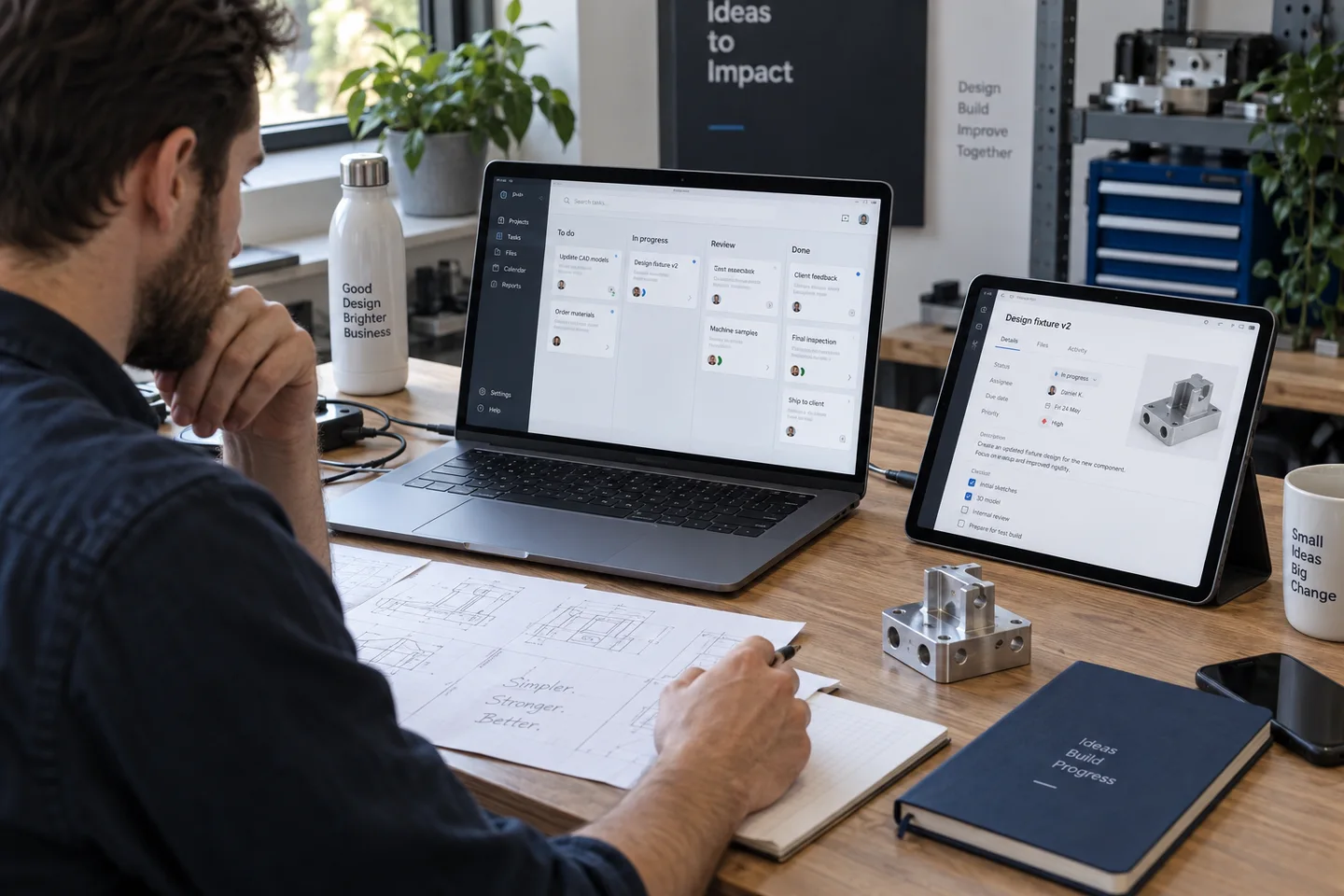
The workshop information bottleneck.
On a busy fabrication shop floor, the people doing the actual work constantly need information:
- “What’s the status of job 3842?”
- “Where is drawing revision C for this part?”
- “Do we have 6mm plate in stock or do I need to order it?”
- “What weld procedure applies to this joint?”
Right now, in most shops, the answer involves walking to the office, asking someone to look it up, or hoping the paper packet on the job is up to date. Every time this happens, productive time is lost and the chance of using out-of-date information increases.
Kingsland had exactly this problem as they grew.
What we built for them
As part of the broader system we delivered, we added a conversational interface that the shop floor can actually use.
The assistant connects to their job tracking, drawing register, and stock system. A fabricator or supervisor can ask questions in plain English on a tablet or even a phone at the bench and get accurate, up-to-date answers without leaving the work area.
This is not a generic chatbot. It is grounded in their actual data and only answers questions it has reliable information for. When it doesn’t know, it says so and tells the person where to go for the answer.
Why most “shop floor AI” projects fail
Many attempts at factory-floor AI assistants fail because:
- They are built by people who have never stood on a shop floor
- The interface is too complicated or requires perfect speech
- The underlying data is messy, so the AI confidently gives wrong answers
- There is no trust, the team goes back to asking a human because the system is unreliable
The version running at Kingsland works because we built it with the actual people who would use it, on real messy data, and we were ruthless about only exposing capabilities that were accurate and useful.
The real benefit
It’s not just the time saved walking back and forth (although that adds up). It’s that the person who used to be the “information oracle” in the office gets hours back every week to do actual management or customer work. And the fabricators get what they need faster, with less frustration and fewer mistakes from outdated information.
This is the kind of AI that feels like “finally, someone built something that actually helps the people doing the work.”
Does this pattern exist in your business?
If you have:
- A workshop where people regularly need job, drawing, or material information
- One or two people who spend a surprising amount of time answering “where is…” and “what’s the status of…” questions
- Frustration when information is hard to find or out of date
…then a well-built shop floor assistant is one of the most appreciated AI tools we deploy.
We always start by spending time on the floor, understanding the actual questions people ask and the systems the answers live in. Then we build the smallest useful version and improve it with the team who will actually use it every day.
The work at Kingsland is live and evolving. We can show you exactly how it works in a real fabrication environment.
Want your shop floor to stop walking for information?
Contact us. We’ll come and watch how information actually flows (or doesn’t) in your workshop and tell you what is realistically possible.
Based on production conversational AI work delivered for Kingsland Fabrications.
This system was built and is running in production for Kingsland Fabrications. Real results, real business, not a demo.
What people ask us.
01 What is an AI shop-floor assistant?
It's a natural-language interface your team can ask directly on the shop floor (on a tablet, phone, or fixed screen) about job status, drawings, stock, or work instructions. It's grounded in your own job tracking, drawing register, and stock systems, not the open internet.
02 How is this different from a generic chatbot like ChatGPT?
A generic chatbot doesn't know your jobs, drawings, or stock, it can only guess. An AI shop-floor assistant is connected to your actual live systems, only answers from data it can verify, and says so plainly when it doesn't know something. It's built for one workshop's real data, not general knowledge.
03 Will our team actually use it?
Only if it's built with the people who'll use it, on your real messy data, and kept strictly honest about what it does and doesn't know. Most shop-floor AI projects fail because they're built by people who've never stood on a shop floor. We start by spending time on the floor before writing any code.
04 What does it cost and how long does it take?
It depends on how many systems it needs to connect to and how messy the underlying data is. Most shop-floor assistant builds start in the low thousands and take a few weeks for a first working version, with the assistant's usefulness growing as the team's real questions get folded in.
Keep exploring
Build this for your business.
What could work
better for you?
A new website. More customers. Less admin.
Tell us where you want to get to. We will reply within one working day.