
Ask three UK agencies what an app costs and you will get three answers, all starting with “it depends”. It does depend, but not on mystery. It depends on who uses the app, how many devices it runs on, whether it goes on the public App Store and what it has to connect to.
This article gives you the numbers as of October 2026, from published UK agency pricing, contractor day rates and what we charge ourselves. We have built native apps for a fabricator’s shop floor, a charity shop counter, an upholstery workshop and our own products, so the figures below come from doing the work, not guessing.
The short version
For a UK business in 2026:
- A focused staff app (one job, one device type, installed privately for your team): UK agencies commonly quote £10,000 to £25,000. Ours start from £7,500, usually four to six weeks.
- A first public App Store app (customer accounts, a backend, a simple admin screen): commonly £20,000 to £40,000. Ours start from £15,000, around two to three months.
- A field app on iPhone, iPad and Android (offline working, photos, signatures, several integrations): commonly £30,000 to £150,000. Ours start from £25,000, three to five months.
- Running costs: budget 15 to 25% of the build cost each year for updates and fixes. Our app care starts from £175 a month.
- Apple and Google fees: the Apple Developer Program was $99 a year and Google Play a one-off $25 when we checked.
All our prices exclude VAT. Now the detail.
Why app prices vary so much
Most of the gap between a £5,000 quote and a £50,000 quote comes down to five things.
Who uses it. An app for six of your own staff is a different job from an app for thousands of strangers. Staff apps can skip sign-up flows, marketing screens and App Store review, and you can train the people using them.
How many devices. One iPad model sitting on a counter is the cheapest case. iPhone, iPad and Android phones in every screen size is the most expensive, because every screen has to be designed and tested several times.
What it connects to. An app is rarely the whole system. It needs somewhere to store members, jobs or orders, and a secure way to talk to it. If you already have that system, the app plugs in. If not, part of the budget builds it.
Offline working. If the app has to work in a basement, a workshop or a field, it must save everything on the device and sync it later without losing a photo. That is one of the biggest single cost drivers, and one of the most often underestimated.
Device features. Camera, barcode scanning, LiDAR measuring, maps, location and signatures all add work. They are also usually the reason you need an app rather than a website.
Price bands with real examples
Staff app: from £7,500
One job, one device type, installed privately on your own devices. Nothing appears on the public App Store.
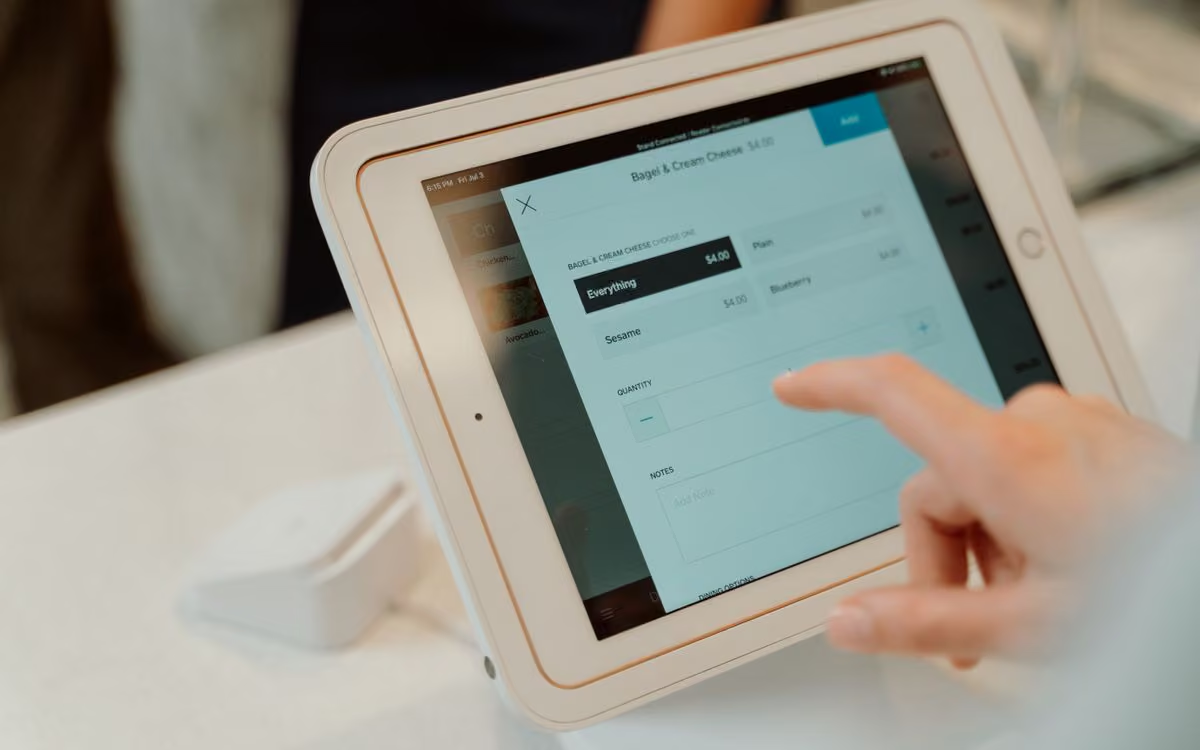
Our example is the custom iPad membership and till app we built for The Bridge at Leigh, a community food bank. Volunteers register members once, find them on return visits and ring items through at the counter. It replaced paper. We delivered it at our charity rate.
Another is the native iPad shopfloor app we built for Kingsland Fabrications. Fabricators see the work assigned to them by the production system, and every change is still checked and recorded by that system.
App Store launch: from £15,000
A public app with customer accounts, a backend to store their data and a simple admin screen for your team. This band also covers App Store and Google Play listings, screenshots, privacy details and getting through review.
Our example is DryRide, our own iPhone app for motorcycle riders. It compares the fastest route with the driest one using Apple’s maps and weather data, and is being prepared for App Store release.
Field and multi-device apps: from £25,000
Native iPhone, iPad and Android apps that work offline, take photos and signatures, and connect to several systems. These are the apps engineers and site staff rely on all day.
Our example is the engineer app for DoorOps, our software for door contractors. We are building it natively for iPhone, iPad and Android so engineers can see the day’s jobs, site warnings and forms, and finish the paperwork on site. The site visit app for Valley Upholstery, which uses the iPhone camera and LiDAR to capture furniture for quoting, sits between the first two bands.
Day rates: how to sanity check a quote
Quotes are built from time, so it helps to know the going rate. In the six months to October 2026, IT Jobs Watch put the median UK contract rate for an iOS developer at about £400 a day, with React Native contractors nearer £475 to £500. Agencies charge more than contractors because they also cover design, testing, project management and support after launch.
A simple way to check a quote: divide it by about £500 a day. A £7,500 staff app is roughly three weeks of work. If someone quotes £3,000 for a public app with accounts and payments, ask what is left out. If someone quotes £60,000 for a single-screen staff tool, ask what is included.
Costs nobody mentions until later

Apple Developer Program. $99 a year, charged in local currency, when we checked in October 2026. A company account needs a free D-U-N-S number, which can take a week or two to arrive, so start early. Apple waives the fee for eligible non-profits.
Google Play. A one-off $25 registration fee. Google also has testing rules for new accounts before an app can go public, so allow extra time before launch.
Hosting and services. The backend, file storage, push notifications and maps all have running costs. For a small staff app these are often a few pounds a month. For a busy public app they grow with use.
Annual updates. Apple and Google release a new operating system every year and change their rules. An app nobody touches will eventually stop working or be removed. Budget 15 to 25% of the build cost a year, or a fixed care plan.
Your own time. Someone in your business needs to answer questions, test builds and decide what matters. Plan a couple of hours a week during the build.
Native or cross-platform?
Native means building in Apple’s own tools (Swift) for iPhone and iPad, and Google’s (Kotlin) for Android. Cross-platform means one codebase that runs on both.
For one platform, native costs about the same and gives you the best camera, maps, offline and accessibility support. Most UK businesses we work with start on iPad or iPhone because that is what their staff already carry.
When you need iPhone and Android on a tight budget, cross-platform can save money. We have built both. The honest answer depends on the devices your users actually have, not on which approach an agency prefers.
Do you need an app at all?
Often you don’t. A mobile-friendly web app can handle forms, lists and dashboards for less, with no App Store and no annual fees. A native app earns its place when you need the camera, LiDAR, offline working, a till, push notifications or a device that stays on the shop floor all day.
A good agency should tell you this before you spend anything. If every answer is “you need an app”, get a second opinion.
Frequently asked questions
Can we have an app just for our staff, not on the App Store? Yes. Apple supports private distribution through Apple Business Manager custom apps and unlisted App Store apps, plus TestFlight for testing. Android apps can go on a closed Google Play track. Only your team can install them.
Who owns the app? The developer accounts and store listings should be in your company name, not the agency’s. Code ownership should be written into the project agreement. If an agency wants to publish your app under its own account, ask why.
How long does it take to build an app? A focused staff app usually takes four to six weeks. A public App Store app takes two to three months plus review time. Multi-device field apps take three to five months.
What does Happy Webs charge? Staff apps from £7,500, App Store launches from £15,000, and field and multi-device apps from £25,000, all fixed price for the agreed first version and exclusive of VAT. App care starts from £175 a month. See our iPhone, iPad and Android app development page or tell us about your app.
Take these numbers to any app agency you talk to and ask them to be as clear. The ones that can tell you what is included, what it will cost to run and who owns it are the ones worth hiring.
We build native apps for the people doing the work: an iPad by the bench, a till at the counter, a phone in the van. We have built them for a fabricator, a charity shop, an upholstery workshop and our own products. Each app connects to the systems you already run, keeps working when the signal drops and is tested on the real devices before anyone relies on it.
Explore the serviceTell us what you want to improve →
Also relevant: Custom Software & AI