
Kingsland Fabrications · Software & AI
The system behind 120% growth vs plan.
Custom MES and production AI for a Warrington steel fabricator. Roughly 120% revenue growth versus the start-of-year plan that financial year, with no increase in the wage bill. Website was the door; the system runs the shop. Stephen Chappell, MD.
What changed for the business.
Kingsland Fabrications is a steel fabrication specialist based in Warrington. Like many successful fabrication businesses, they had grown for years on reputation, repeat work, and word of mouth. When Stephen Chappell, the Managing Director, first got in touch, he was looking for one thing: their first proper website.
The website got built. It is not the commercial win.
The win is the custom Manufacturing Execution System and production AI Happy Webs built around how steel fabrication actually runs, so the same team could manufacture more efficiently, take more work, and grow revenue without inflating the wage bill.
The numbers that matter
Versus the revenue plan at the start of that financial year, the shop finished the year at roughly 120% growth (more than double the plan), with no increase in headcount or wage bill. Absolute revenue figures stay private to the client. The public story is the percentage and the staffing line: the lift came from productivity, less admin, less rework, better shop-floor flow, document processing on the paperwork that used to eat supervisor days.
That is what custom software with AI is for industrial SMEs: more output from the people you already employ, not another round of hiring.
The real problem (it wasn’t the website)
During discovery it was obvious the site was a symptom. The shop still ran large parts of the operation on a physical Kanban board and a mess of free or low-cost tools bolted together over time. Status updates meant walking the bays. Spreadsheets and inbox hunting ate the office day.
That creates a hard ceiling:
- Jobs delayed or hard to see end-to-end
- Admin chasing status instead of processing orders
- Growth limited by how many hours people can manually move paper and walk the floor
Stephen knew they needed better systems. They needed a partner who builds for fabrication, not generic SaaS demos.
Phase 1: Custom MES (the foundation)
We built a Manufacturing Execution System around Kingsland’s real workflows:
- Real-time job tracking through cutting, welding, finishing and dispatch
- Digital stage transitions that replaced the physical Kanban board
- Visibility between office and fabrication bays
- Data capture that fabricators would actually use
Admin stopped chasing. The floor reported status because the system helped them. The human bottleneck started to ease. This is the system that unlocked capacity, not a brochure site.
Phase 2: Production AI on top of the MES
With the core system live, we attacked the remaining time sinks.
Paint note automation
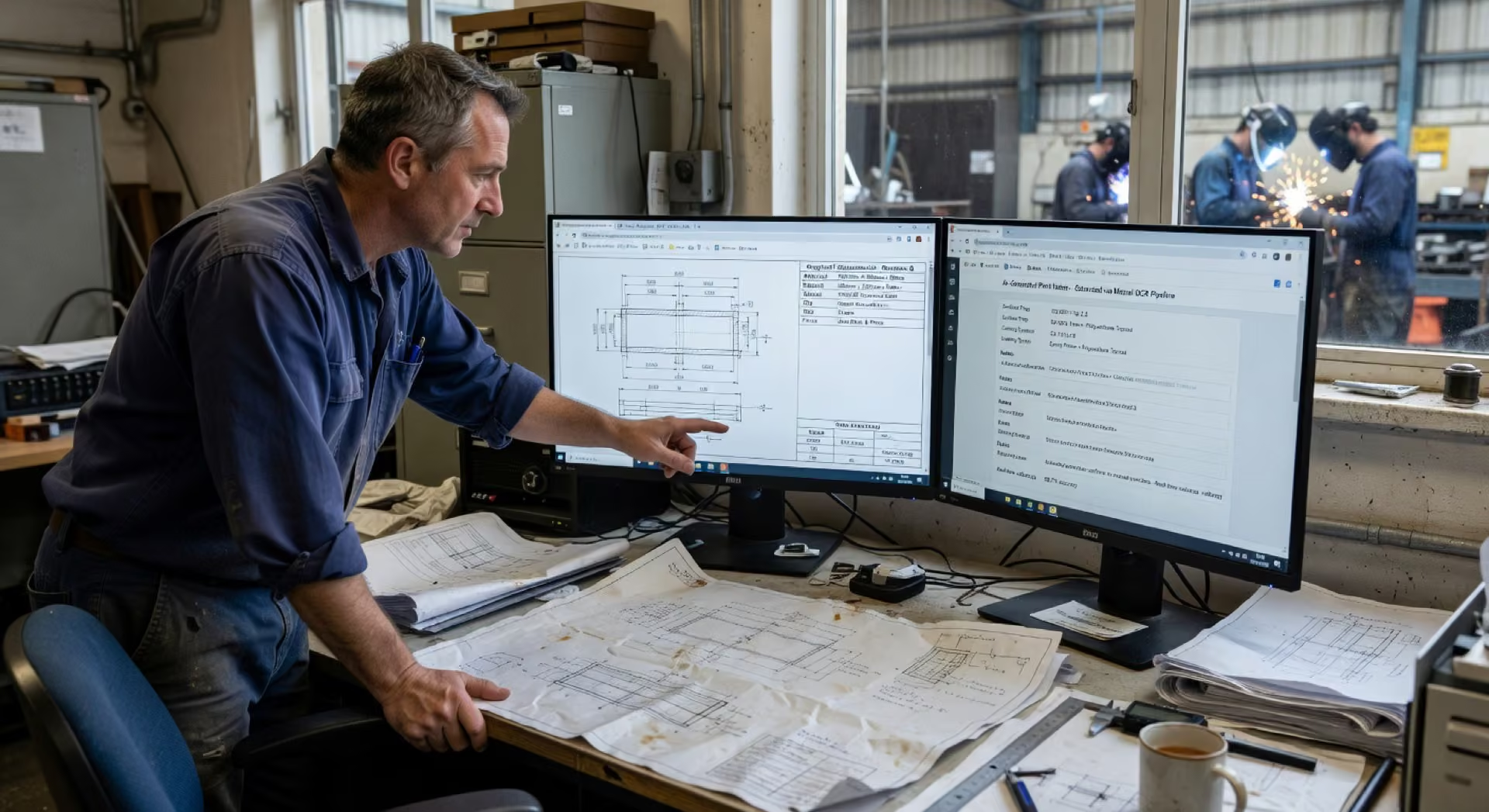
A supervisor was spending up to two hours every day turning drawings and cut lists into paint instructions. We built a pipeline (OCR + language model) that reads drawings and generates paint notes automatically. That time went back into fabricating and QC.
Invoice and purchase order matching
Supplier invoices matched to POs and goods receipts automatically, mismatches flagged, three-way match ready for payment, hours of weekly admin compressed into minutes-class review.
Drawing extraction, BOM, shop-floor assistant, QC
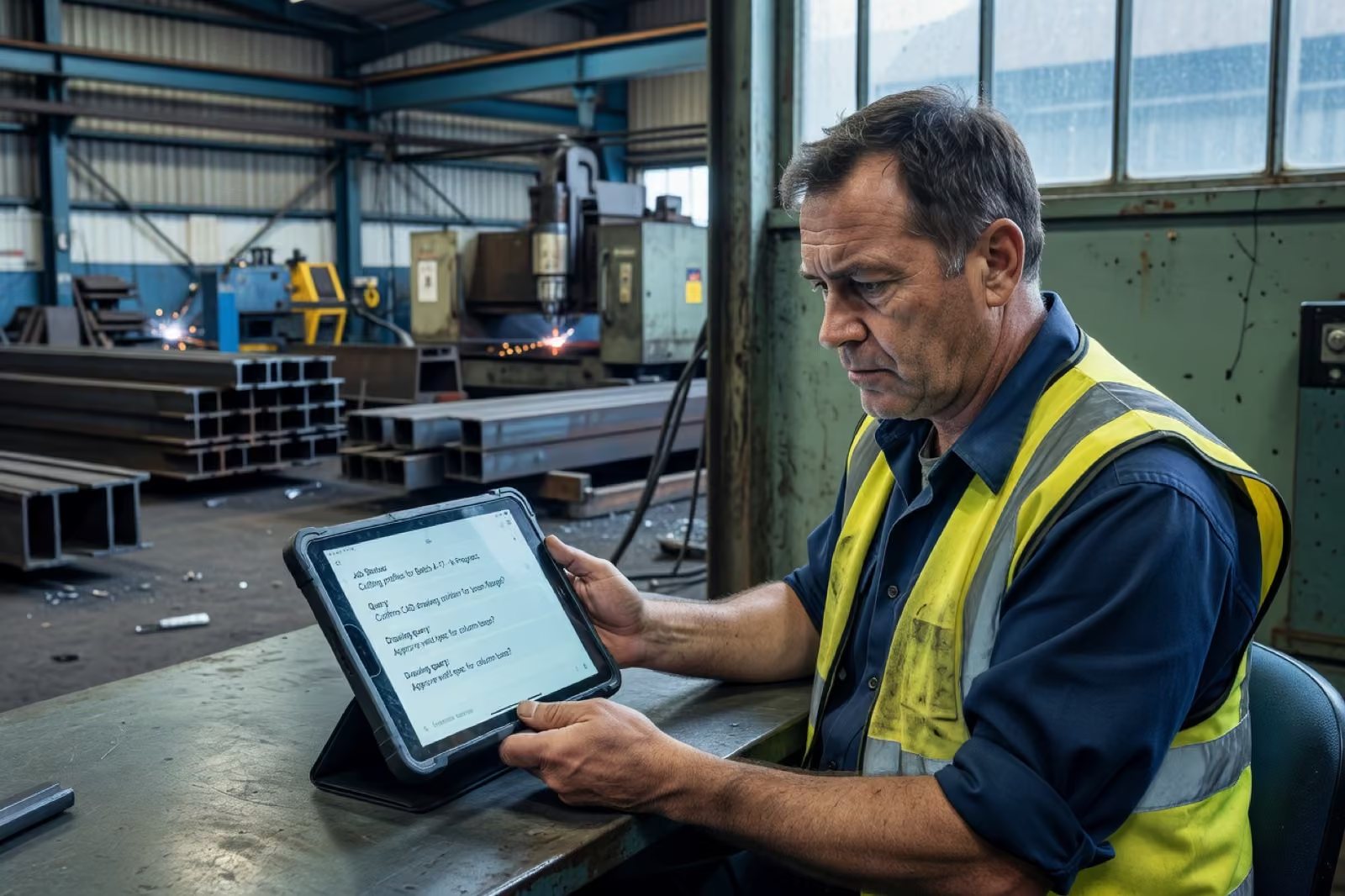
Further layers: drawing extraction into structured job data, a conversational assistant on tablets in the bays, photo-based QC and more workflow automation. Each layer removes work that used to be “just how things are”.
Phase 3: The website they originally asked for
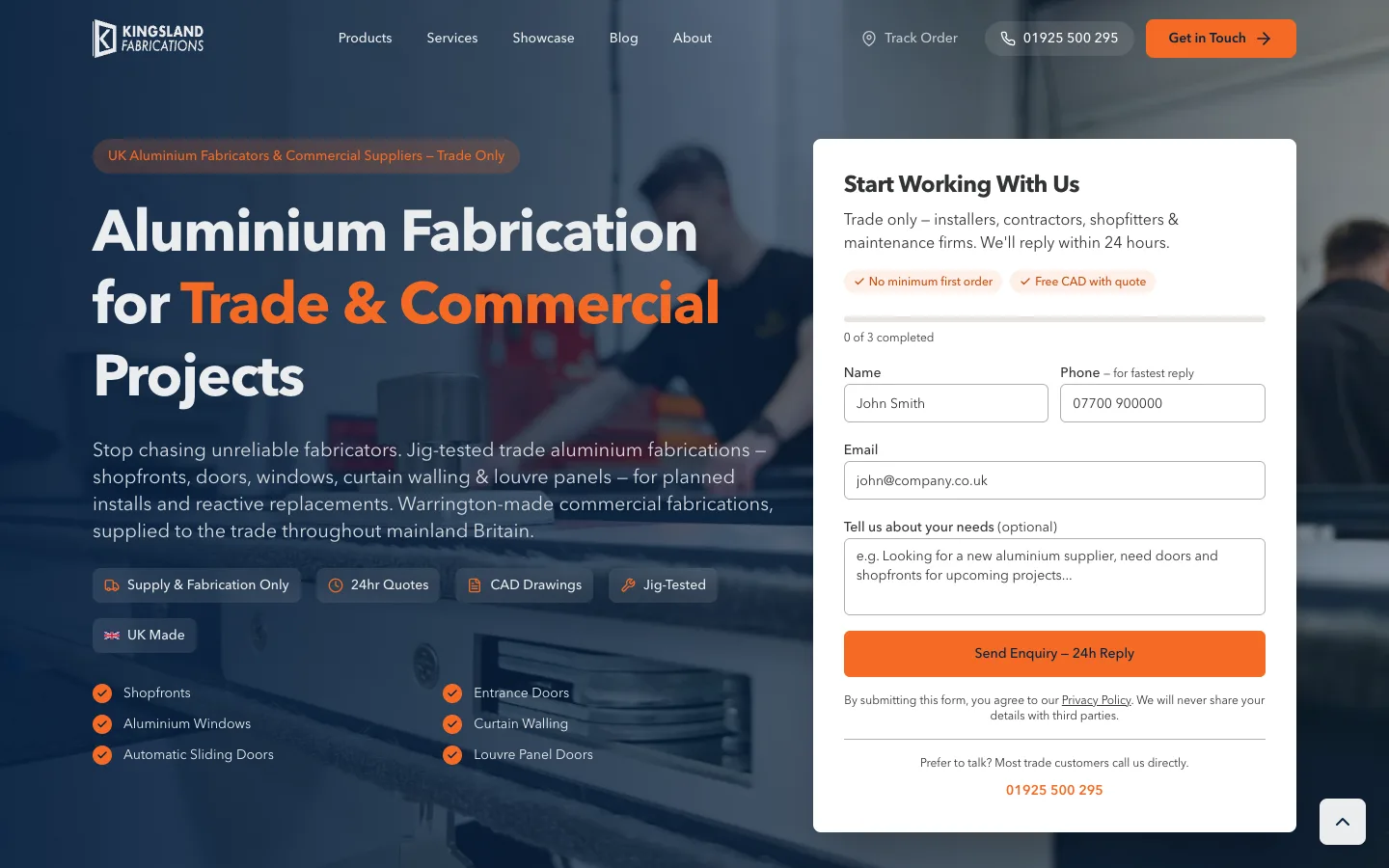
They still needed a proper online presence. The site (kingslandfabrications.co.uk) was their first real one: on-site photography, clear services, enquiry forms, something that matches the standard of work they produce. It generates organic enquiries they never got from word of mouth alone.
Useful. Credible. Not the reason revenue went to ~120% growth versus plan with a flat wage bill. That was the MES and AI.
Ongoing partnership
The work did not stop at go-live. We still work with Kingsland on a continuous basis: review the operation, pick the next bottleneck, ship the next layer. The system grows as the shop grows.
Results summary
| What | Outcome |
|---|---|
| Revenue (that FY) | ~120% revenue growth vs plan |
| Staff / wages | No increase, capacity from productivity |
| Core system | Custom MES replaced Kanban + fragmented free tools |
| Paint notes | ~2 hrs/day supervisor time → near zero |
| Website | First proper site + online enquiries |
| Relationship | Ongoing digital operation, not a one-off project |
Why this is the proof case for Happy Webs
Most industrial clients still start with a website (and often SEO) because that is the enquiry machine. Kingsland shows what happens when the relationship goes deeper: custom software and AI that let a fabrication shop do more work with the same people.
That is the hire spiral in reverse, grow output without growing the admin and supervision bill.
Figures above are as shared by Happy Webs from the financial year when the MES/AI programme was live with Kingsland Fabrications. Partnership ongoing.
"We came to Chris wanting a website. We ended up with a system that runs the whole shop, and it's still growing."
Stephen Chappell, MD, Kingsland Fabrications
Keep exploring
Planning a similar project?
Valley Upholstery
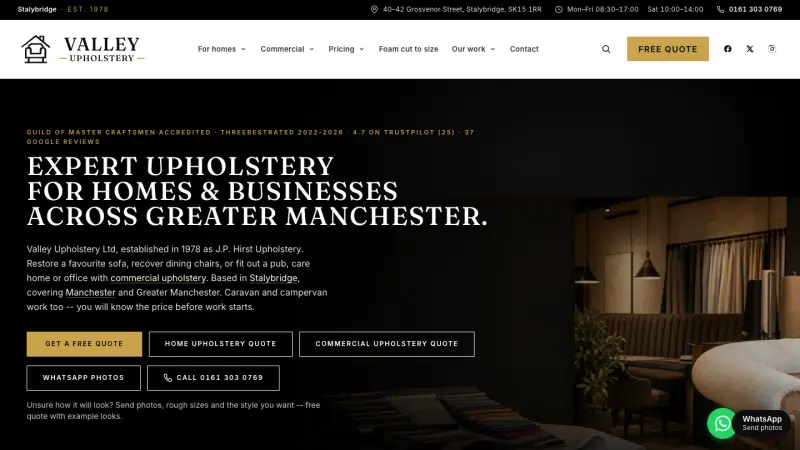
A Stalybridge upholstery workshop, established in 1978, moved off WordPress onto a fast Astro site with an instant foam calculator, a quote wizard and real-job area pages. Google clicks went from 430 in the quarter before launch to 2,178 in July to September 2026.
CRB Door Systems
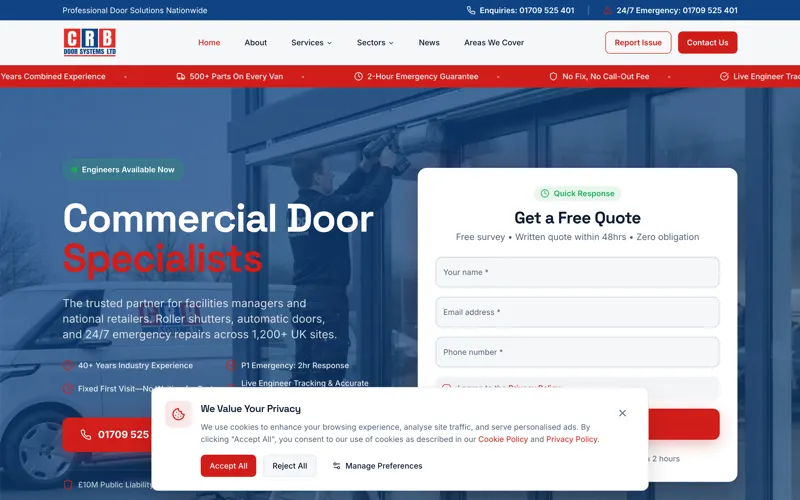
Commercial door installer and service firm: dormant website rebuilt for enquiries and SEO, Google Workspace migration, custom stock system starting. Website first, then systems. Long-term partnership from a site that wasn't working.
Planning a similar project?
A 15-minute chat with the people who do the work. No slides. No pitch deck. You tell us what's on your plate; we follow up by email with real thinking.
Phone0161 399 6546
Studio81 Penny Meadow, Ashton-under-Lyne, OL6 6EL
HoursMon-Fri · 09:00-17:00 UK time