What we need to see
Representative documents, the fields you need and examples of scans, missing pages or difficult layouts.

Document extraction · Fabricators
Reading a drawing pack is the slowest part of estimating. Your senior estimator spends an hour with a calliper and a calculator, pulling out cut lengths, weld details, plate thicknesses, and finishes. AI does the same job in seconds, and we built the playbook for it at Kingsland Fabrications.
Tell us the task, your current tools and where the work gets stuck. We will help you choose a sensible first scope.
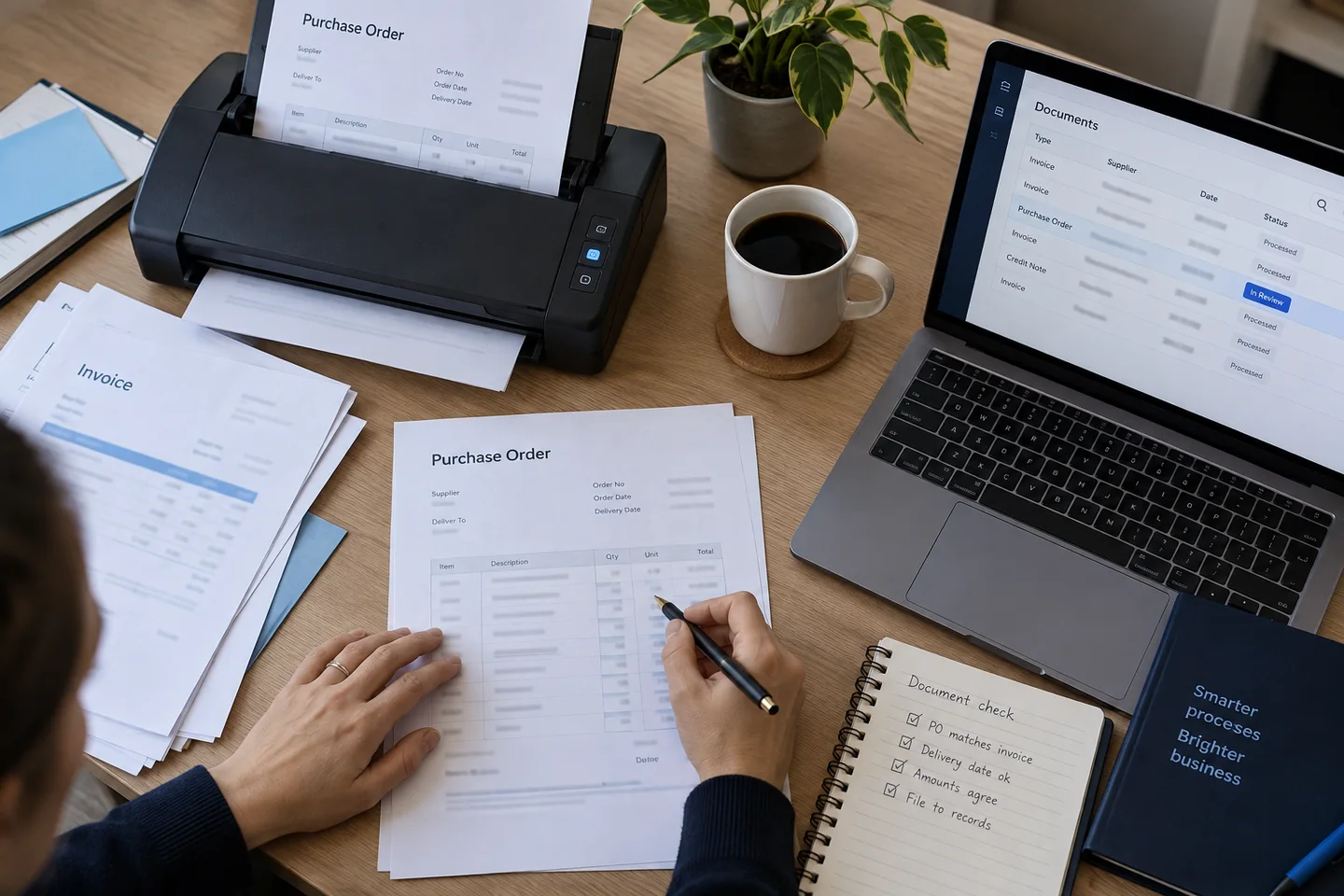
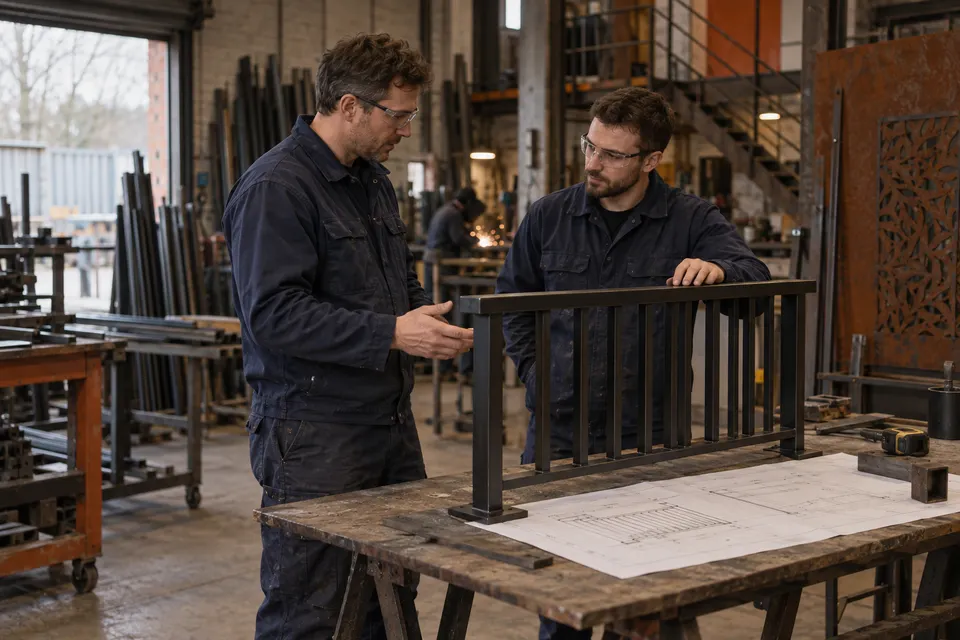
Drawing packs arrive in every variation. PDFs from SolidWorks, scans of CAD prints, the occasional hand-marked photocopy with notes in the margin. Your estimator pulls out: parts list, dimensions, weld symbols (fillet/butt/penetration), plate thickness, material grade, finish spec, special notes. That data goes into the BOM, then into the quote. The current process is reliable but slow, and it's held in one or two heads.
The work in context · Illustrative scenes
Use representative inputs from the business to scope document extraction. Agree what the system prepares and what a person needs to check.

Test normal work, missing information and failures with the team, then hand over clear review steps and practical guidance.
See the business context and the work delivered. Your own scope, inputs and results will depend on the workflow we agree with you.
Explore the delivered workThe model is tuned on real fabrication drawings, it recognises weld symbols (BS 8888 and ISO), plate codes (PL10, PL15, etc.), material grades (S275/S355), and the conventions your draftsmen use. Not generic OCR.
Parts list, dimensions, weld lengths, plate thicknesses, surface area for finish, special notes flagged for the estimator. Structured output, ready to drop into your estimating tool or your quote template.
Multi-sheet drawing packs, GA + detail drawings, cross-references between sheets. The system stitches the pack together so the BOM reflects the whole job, not just the front page.
Bespoke welds, non-standard finishes, customer-specific notes, flagged for the estimator to review. The 80% standard work runs through automatically; the 20% judgement work gets human attention.
We check your software version, available API or export, access permissions and any supplier fees before quoting. If a reliable connection is not available, we will explain the practical alternatives.
Representative documents, the fields you need and examples of scans, missing pages or difficult layouts.
Check field accuracy against a human-labelled sample and measure the time still needed to verify the output.
Keep the source beside each extracted value. A named reviewer checks critical fields before downstream use.
£4,800-£12,000 for build, ~£300-£600/month for hosting + accuracy monitoring
From £4,800excluding VAT
Document extraction for fabricators
Yes, we tune for your conventions during build. Whether you use BS 8888, ISO, ASME, in-house standards, or a mix of all four, the system is calibrated to your weld symbols, material codes, finish specs, and notation. Adding new conventions later is straightforward.
Yes. Scans, photos taken with a phone, marked-up prints, multi-generation photocopies. Modern vision models are robust to image quality in ways old OCR wasn't. The system falls back to "send to human" when the image genuinely can't be read.
Recognised and flagged. Customer-specific procedures (e.g. "WPS-12 applies to all butt welds for this customer") get attached to the BOM as a note for the estimator. The system doesn't make the procedural decision, it just makes sure the human sees the right context.
Yes, we integrate with your estimating tool, ERP, or spreadsheet. The BOM lands in the same format you'd expect a human to produce, ready for pricing. Pairs naturally with our quote-generation use case for end-to-end drawing-to-quote automation.
Accuracy is measured during the pilot against your labelled drawings and the fields that matter. Low-confidence values are flagged for review, and nothing should pass silently when the system is uncertain.
Keep exploring
A new website. More customers. Less admin.
Tell us where you want to get to. We will reply within one working day.