
Trades & service · UK
Win the work. Lose the chasing.
Websites and connected admin flows that keep enquiries, quotes, job updates and paperwork moving while your team is on the tools.
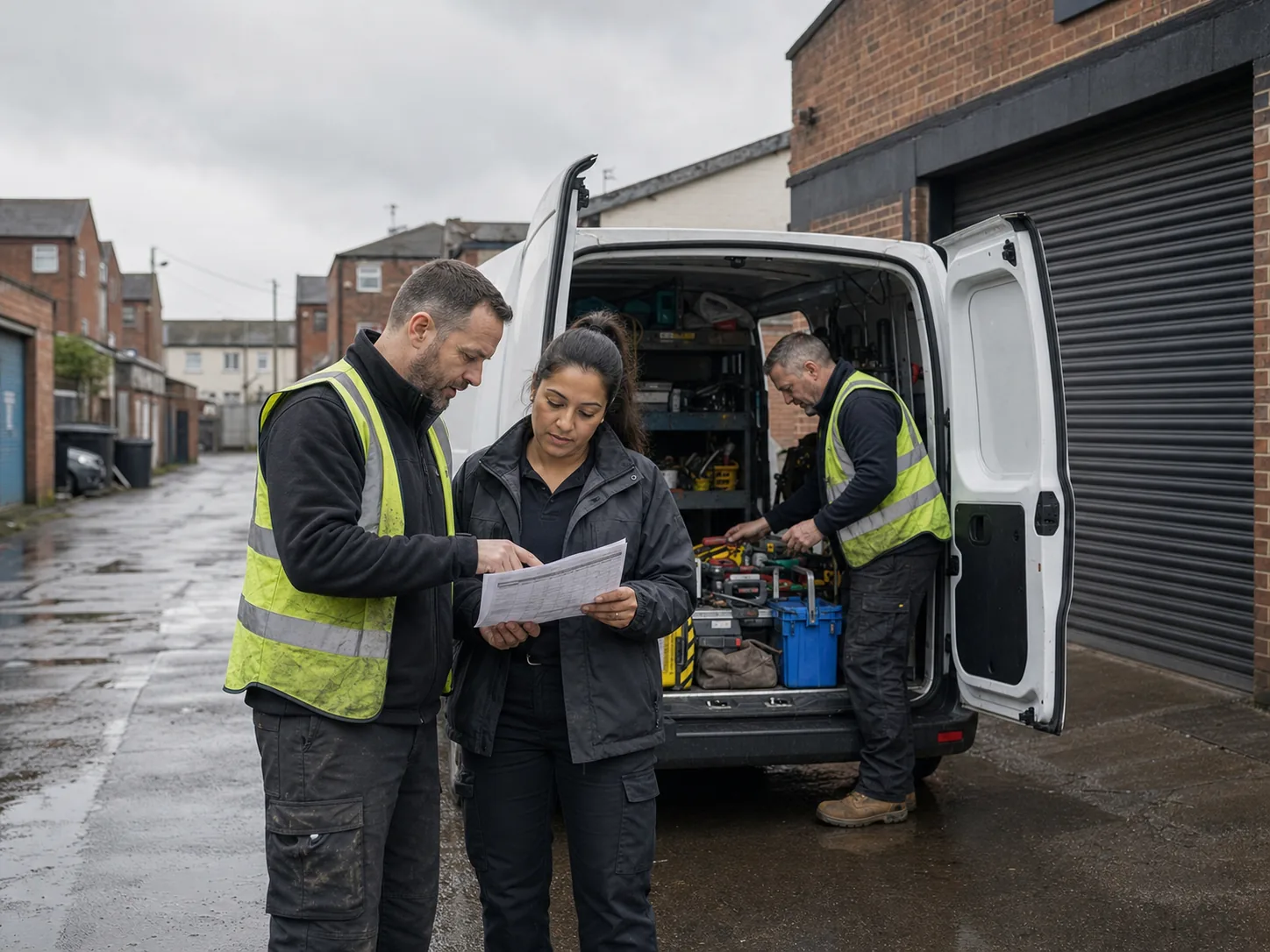
Best first move
Choose the one trade workflow costing you time this week.
Send the repeat admin that wastes office time or slows the first response: enquiry triage, quote notes, RAMS, method statements, supplier invoices, hire reconciliation, scheduling or quote follow-up. We will map the inputs, show what stays human, and price the first build from £2,000 before any bigger system is suggested.
- 1 workflow
- scoped before anything is built
- from £2,000
- for focused first builds
- 2-6 wks
- typical first sprint
Turn the first question into a sensible scope.
If one of these sounds like your business, it is probably a better first build than trying to automate everything at once.
Pick the first workflow worth automating.
The best trades automation starts with one repeatable admin job, not a whole-business rebuild.
Enquiry triage and quote notes
Best fit: Builders, cladding firms, scaffolders, decorators, facilities contractors and reactive maintenance teams with mixed-quality enquiries.
First move: AI reads the enquiry, spots the trade, site type, urgency and missing details, then drafts the quote notes or first reply for approval.
Why it helps: Faster first response, fewer forgotten enquiries and less gaffer-at-9pm quote admin.
RAMS and method statement drafting
Best fit: Commercial trades that repeat similar site work but still rebuild RAMS, method statements and job packs from old Word files.
First move: The system pulls from approved templates, job details, site constraints and previous similar work, then prepares a draft for human sign-off.
Why it helps: Less copy-paste admin while keeping safety judgement with the people who know the work.
Supplier invoice and hire reconciliation
Best fit: Plant hire, access kit, skips, materials, subcontractors and supplier invoices spread across email, PDFs and spreadsheets.
First move: AI matches invoice lines to jobs, POs, hire periods or delivery notes, then flags exceptions before finance wastes time chasing.
Why it helps: Cleaner job costing, fewer missed hire charges and less manual checking at month end.
Scheduling and customer updates
Best fit: Reactive maintenance, industrial cleaning, insulation, service teams and trades with engineers or crews moving between sites.
First move: Automation drafts status updates, routes urgent jobs, checks availability and keeps customers informed without replacing the coordinator.
Why it helps: Fewer status-chasing calls, clearer priorities and a smoother route from enquiry to completed job.
The daily friction we hear about.
Every enquiry needs sorting before a quote can happen
Someone has to read the email, check the site details, ask for missing information, work out urgency and decide who should quote it. Automation can prepare that triage before it reaches your desk.
Quote notes, RAMS and method statements get rebuilt by hand
If your team copies from old Word files, digs through emails or retypes the same scope notes, automation can draft the first version while your people keep the judgement and sign-off.
Supplier invoices, hire kit and job costs drift apart
Scheduling, plant hire, supplier invoices and job updates often sit across spreadsheets, WhatsApp, email and memory. That is where missed costs and month-end checking pile up.
Commercial buyers cannot tell if you are the safe choice
Facilities managers and procurement teams look for accreditations, project evidence, response process, coverage and sector experience. A thin trade website makes bigger contracts harder to win.
What we can build for trades & maintenance.
Enquiry, booking and follow-up agents
Capture job details, answer approved routine questions, book work, send reminders and chase quotes while handing exceptions to your team.
See how we build it 02Custom job and customer software
Simple systems for leads, quotes, jobs, engineers, recurring work and customer history without forcing a small team into enterprise software.
See how we build it 03Quote and job-sheet automation
Turn emails, forms, notes and site paperwork into structured job records, quote drafts and invoice-ready information.
See how we build it 04Connected office tools
Join up Gmail or Outlook, calendars, documents and spreadsheets so staff stop retyping the same customer and job details.
See how we build it 05Lead-generating trade websites
Fast, mobile-first websites with service pages, proof, coverage areas and contact journeys designed around real jobs.
See how we build it 06Local SEO and GEO
Service and location pages, Google Business Profile support and search foundations that help nearby customers find the right trade.
See how we build itNeed a different starting point? See all our services →
Practical AI patterns for trades & maintenance.
Each page explains a specific workflow, the human safeguards and a sensible first scope. Named client proof is labelled separately.
Things people in this sector ask us.
01 What does automation for trades and service businesses actually do?
It means using software and AI to handle repeat office work around enquiries, quotes, RAMS, method statements, scheduling, supplier paperwork, hire kit and follow-up. The system prepares the admin, asks for missing details and routes work, while your team still approves anything commercial, safety-critical or judgement-based.
02 Which workflow should a trade or service business automate first?
Start with the repeat admin that causes missed enquiries, late quotes or messy job costing. Common first workflows are enquiry triage, quote note drafting, RAMS and method statement drafts, supplier invoice checks, hire reconciliation, customer updates and follow-up reminders.
03 What does a first build from £2,000 usually include?
A contained first build usually maps one workflow, connects the essential inputs, drafts the output your team needs, adds a human approval step and gives you a working route before anything bigger is scoped.
04 Do you build automation for cladding and scaffolding companies?
Yes. The usual first workflows for cladding and scaffolding firms are enquiry triage, quote notes, RAMS and method statement drafting, supplier documents, hire reconciliation and scheduling. We keep the approval step with your team so the system speeds up admin without taking judgement away from the people who know the work.
05 Can you help with digital marketing for cladding companies?
Yes. We can combine cladding industry SEO services, service pages, proof-led case studies, Google Business Profile work, paid search landing pages and enquiry follow-up so the website attracts buyers looking for commercial cladding, remedials, maintenance and specialist site work.
06 Do you offer SEO services for the cladding industry?
Yes. We focus cladding SEO around the services and proof buyers search for: commercial cladding, rainscreen, facade repairs, remedials, maintenance, accreditations, project evidence and the locations where you can take on work.
07 Do you offer AI marketing services for scaffolders?
Yes. For scaffolders and access companies, the useful work is usually clear job-detail forms, service pages that show safe commercial work, SEO for the areas and sectors you want, and automation that keeps quote follow-up moving instead of relying on memory or WhatsApp.
08 How much does automation for trades cost?
Focused first builds usually start from £2,000 when the workflow is contained, the inputs are clear and the approval step is simple. Larger systems that connect CRM, scheduling, finance or document processing are scoped separately after we understand the workflow and the likely payback.
09 How quickly can a first workflow go live?
A focused first workflow is usually a 2-6 week sprint once the inputs, templates and approval points are clear. Larger systems that connect CRM, scheduling, finance or document processing are scoped separately after the first workflow is understood.
Adjacent industries we work in.
What could work
better for you?
A new website. More customers. Less admin.
Tell us where you want to get to. We will reply within one working day.