
Bespoke AI software vs SaaS AI tools
Use an existing tool or build your own?
An existing subscription tool may cover a standard task. Bespoke software can make sense when the work depends on your own data, rules, systems and approval process.
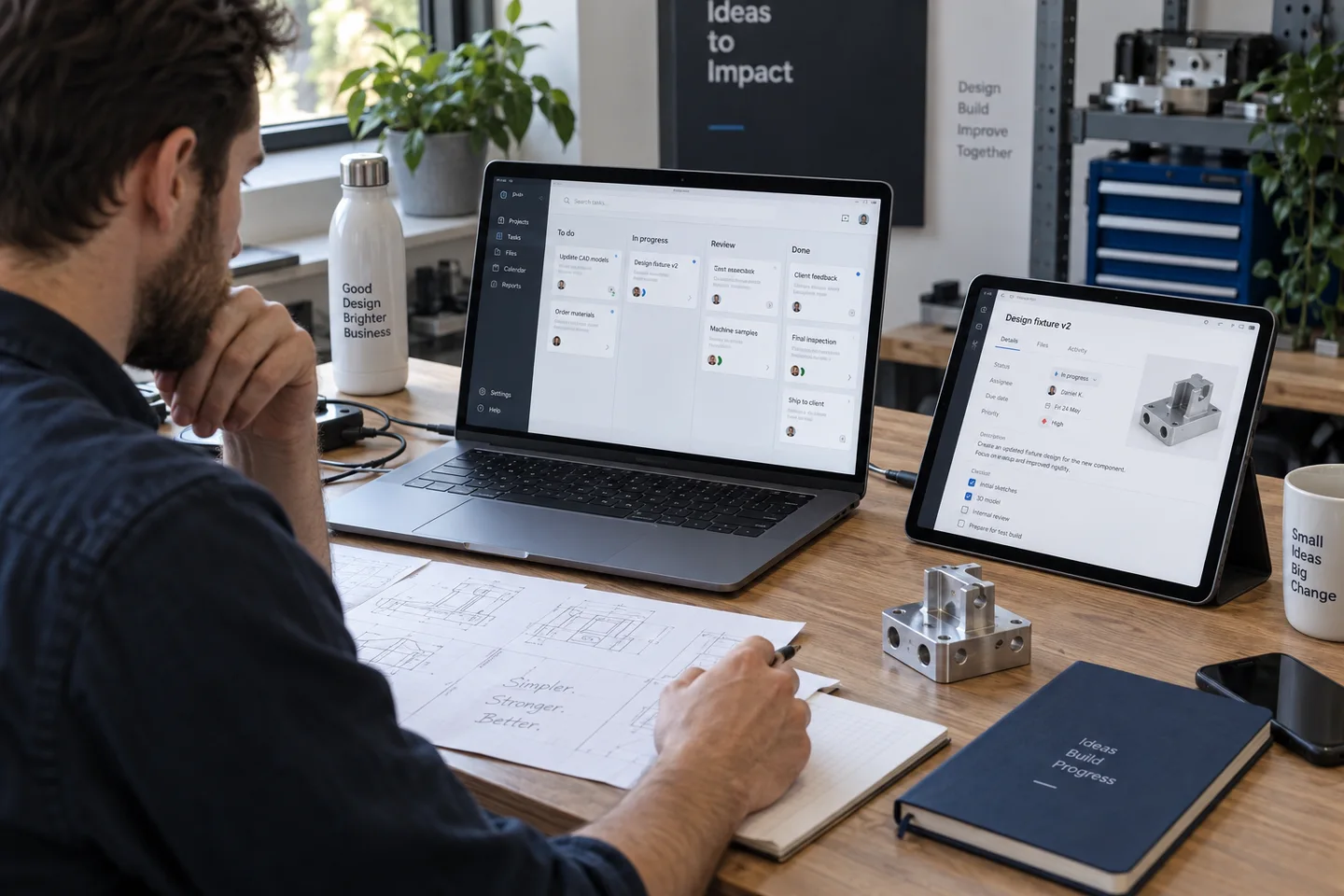
Build or buy review
Find the smallest useful way to improve the workflow.
Show us what happens today and where it breaks. We will check existing options, the missing pieces and whether a custom build is worth the investment.
- From £5,000
- focused bespoke AI builds, excluding VAT
- Agreed scope
- cost and delivery plan before work starts
- Human approval
- where the workflow needs it
When bespoke AI software is worth scoping.
The right answer is not always build. These signals separate a useful bespoke AI project from a problem that should stay in SaaS.
Does a product handle your actual examples?
SaaS fits: Try representative records, including unusual and incomplete cases. Existing tools can use your own data where supported.
Bespoke fits: Consider a custom build when the remaining gaps materially affect the work and can be specified clearly.
Why it matters: A failed sales demo is a starting point for investigation, not proof that all SaaS options will fail.
Can it connect to the systems you keep?
SaaS fits: Check native connectors, configuration and automation tools before replacing a working system.
Bespoke fits: Build the missing connection when the APIs, permissions and data quality make it feasible.
Why it matters: A custom developer cannot remove restrictions imposed by a supplier or recover data that is not available.
Are the controls sufficient?
SaaS fits: Assess roles, approval flows, audit logs, retention and exports against your requirements.
Bespoke fits: Specify and test any missing controls; assign responsibility for patches, backups and monitoring.
Why it matters: Owning code or choosing your hosting does not automatically make a system safer.
Can the first useful change stay small?
SaaS fits: Pilot a configured product on one team or workflow before a wider rollout.
Bespoke fits: Scope one useful outcome with a clear acceptance test and a realistic maintenance budget.
Why it matters: Both routes should prove their value before you commit to a larger replacement.
Check existing products before commissioning a build. Bespoke becomes worth considering when a valuable, well-understood workflow still has gaps after testing suitable tools and integrations. The decision needs a realistic cost and maintenance plan, not an assumption that unusual work always requires custom software.
SaaS AI tools
An existing product you configure and subscribe to
Bespoke AI software
A system designed for your agreed workflow
Dimension by dimension.
Compare each option below. On tablets, swipe sideways or focus the table and use the left and right arrow keys.
| Dimension | SaaS AI tools | Bespoke AI software | Best fit |
|---|---|---|---|
| Cost shape | Licences, setup, integrations, usage and ongoing administration. | Discovery, build, model/API usage, hosting, support and future changes. | Depends |
| Time to value | Can be quick when the product fits and your data is ready. | Depends on scope, integration access, data and acceptance testing. | Depends |
| Workflow fit | Standard features plus whatever configuration or extension the product supports. | Designed around the workflow and edge cases agreed in scope. | Depends |
| Integrations | Depends on native connectors, APIs and vendor terms. | Also depends on system access, APIs, permissions and vendor terms. | Depends |
| Data protection | Assess the supplier, contracts, access controls and configuration. | Assess the hosting, developers, model providers, controls and ongoing operations. | Depends |
| Ownership and exit | Check data exports, contract terms and the work needed to migrate. | Agree code ownership, documentation, credentials and third-party dependencies. | Depends |
| Maintenance | Supplier maintains the product; you still manage access, settings and integrations. | You need a named owner for support, security updates and operational upkeep. | Depends |
| Competitive value | Value can come from how well you adopt and operate an existing tool. | Value can come from a well-executed workflow; custom code alone is not an advantage. | Depends |
The real-world calls.
An existing product handles the job and the exceptions
Choose: SaaS AI tools. Buy and configure it. Include onboarding and staff adoption in the budget.
A valuable workflow has a specific gap after testing suitable products
Choose: Bespoke AI software. Scope that gap as a narrow build, with representative examples and measurable acceptance criteria.
You operate in a specialist industry
Choose: It depends. Test relevant industry software as well as general tools. Industry specialism alone does not establish a need for bespoke AI.
The data is sensitive or access rules are complex
Choose: It depends. Assess the controls and responsibilities of both options. Prefer the arrangement that meets your requirements and can be operated reliably.
You want a competitive advantage
Choose: It depends. Identify the process, data or service improvement that creates value. Compare its cost and durability whether you buy, configure or build.
What we won't hide.
- We build bespoke software, so this is advice from a potential supplier. Ask us to explain why an existing product or integration would not be sufficient.
- A build quote should state intellectual property ownership, third-party licences, model costs, maintenance, handover and exit arrangements.
- There is no universal five-year cost or delivery time. Compare written estimates for the same scope and expected usage.
Questions before you choose build or buy.
01 What is bespoke AI software?
Custom software designed around an agreed workflow, data and approval rules. It may combine conventional software, AI models and existing products rather than replacing every system.
02 When should a small business choose bespoke AI over SaaS?
When a valuable, clearly understood workflow has gaps that suitable existing products or integrations cannot reasonably handle. Test those options first and compare total costs, controls and maintenance.
03 How much does bespoke AI software cost for a UK SME?
Happy Webs focused bespoke AI projects start from £5,000 excluding VAT. The quote depends on the workflow, integrations, data preparation and controls. Hosting, model usage and support are agreed separately.
04 Can bespoke AI work with SaaS tools we already use?
Often, where the tools provide suitable APIs, connectors or exports and the required access is permitted. We check that access before agreeing an integration.
Keep reading.
Book a 15-min call.
We do migrations, builds, and audits across both stacks. Tell us your real constraints and we'll give you an unfiltered recommendation, even if it means recommending we don't get the work.
What could work
better for you?
A new website. More customers. Less admin.
Tell us where you want to get to. We will reply within one working day.