


Here’s something that still catches a lot of manufacturers off guard: procurement managers Google you before they ring you. Not sometimes. Nearly always.
The days of finding suppliers through trade directories and handshakes at exhibitions are fading fast. A 2023 survey by ThomasNet found that 73% of B2B buyers use online search as their primary method for finding new suppliers. And when they land on your website, they’re making snap judgements about whether you’re capable, professional, and worth a phone call.
If your website is a single page with your company name, a stock photo of a generic factory, and a phone number — you’re losing work to competitors whose sites do a better job of showing what they can do.
So what does a good manufacturing website actually look like? Not a flashy one. Not an award-winning one. A good one. One that wins work.
Clear, specific capabilities pages
This is the single most important thing on a manufacturing website. Not a paragraph on the homepage that says “we offer a wide range of precision engineering services.” That tells nobody anything.
Each major capability needs its own page. CNC machining. Fabrication. Laser cutting. Welding. Whatever you do. Each page should cover what equipment you use, what materials you work with, what tolerances you hold, and what sizes you can handle.
Procurement managers search for specific things. “Aluminium CNC machining Manchester” or “stainless steel fabrication UK.” If you don’t have pages that match those searches with specific, detailed content, you won’t show up in the results. And even if someone does land on your site, they need to find their answer fast.
Be precise. “5-axis CNC machining, capacity up to 2000mm x 1000mm, tolerances to +/-0.01mm” is useful. “Advanced precision engineering solutions” is not.
Real photography of your facility
This one is non-negotiable. Stock photos of factories are an immediate credibility killer with procurement managers. They can tell. Everyone can tell.
Real photos of your shop floor, your machines, your finished products, and your team tell a buyer more than any amount of marketing copy. They can see the cleanliness of your facility. They can see the equipment you’re working with. They can get a feel for the scale of your operation.
A half-day professional photography session will cost a few hundred pounds and give you images you’ll use for years. If that’s not in the budget right now, clear smartphone photos of your actual work are still vastly better than stock images. Show the reality. Procurement managers respect that.
And keep updating them. Photos from 2016 don’t do you any favours if you’ve invested in new equipment since then.
Certifications and accreditations front and centre
ISO 9001. ISO 14001. CE marking. Cyber Essentials. JOSCAR. Whatever accreditations you hold, they need to be prominently displayed — not hidden on an “About” page that nobody clicks.
For many procurement managers, certifications are a qualifying filter. If they need an ISO 9001 supplier and can’t immediately see that you have it, you won’t make the shortlist. It doesn’t matter how good your work is.
Put certification logos on your homepage. Create a dedicated quality or accreditations page. Include them on relevant capability pages too. Make them impossible to miss.
If you hold sector-specific accreditations — rail, aerospace, defence, nuclear — these are massive differentiators. Shout about them.
Case studies that show real work
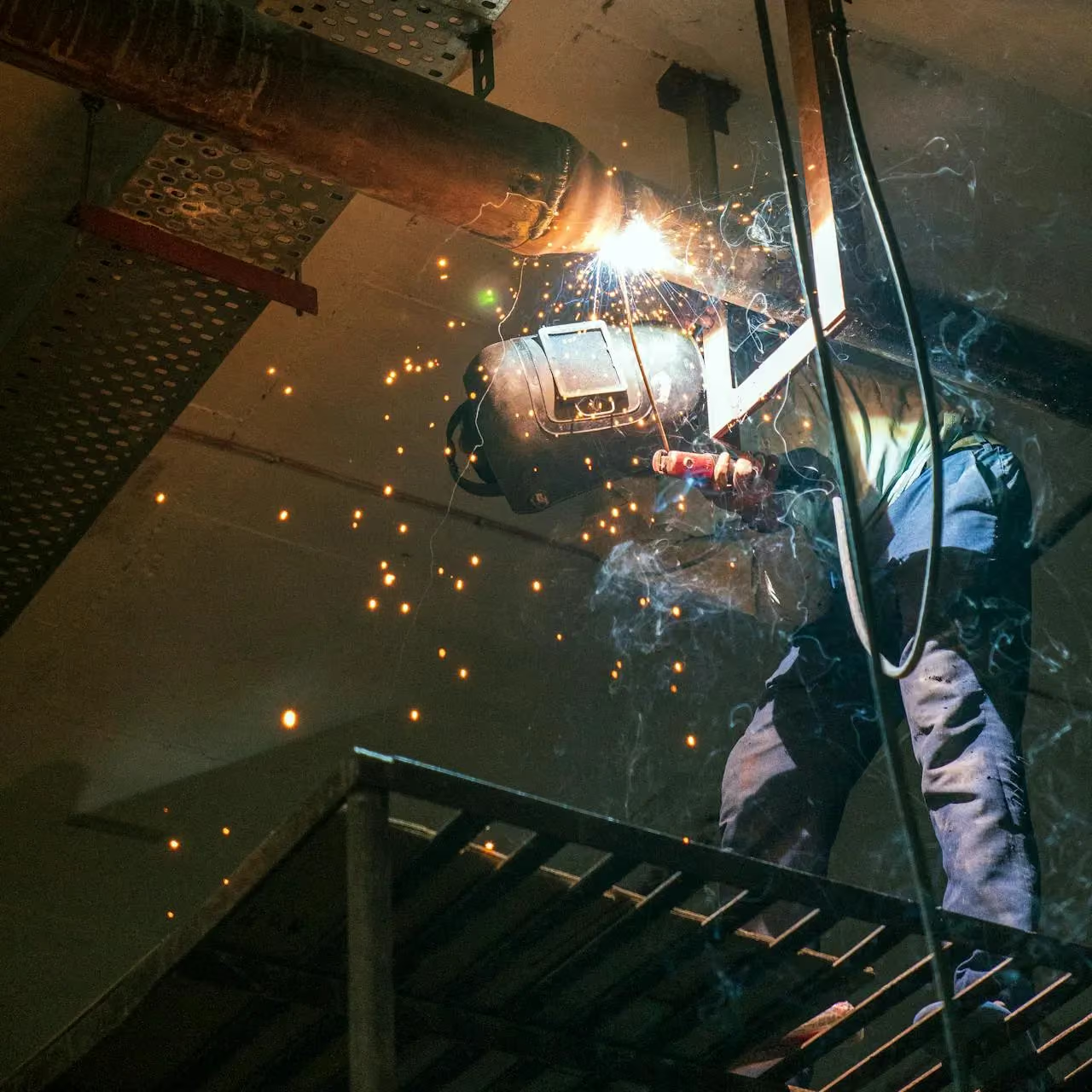
“We did a project for a big company and they were happy” is not a case study. A proper case study explains the problem, what you did, and what happened. It gives a procurement manager confidence that you’ve solved a challenge similar to theirs.
You don’t need dozens. Three or four solid case studies covering different capabilities and sectors will do more for you than a portfolio page with fifty unlabelled photos.
Include specifics: materials used, quantities, timescales, any particular challenges you overcame. If you can include a quote from the customer, even better.
And keep the language practical. Procurement managers aren’t reading these for entertainment. They’re checking whether you’ve done this kind of work before and whether you can handle theirs.
A mobile experience that actually works
This catches out a lot of manufacturers because they think their buyers are sitting at desks on big monitors. Some are. But plenty are checking suppliers on their phones — on train journeys, between meetings, on the factory floor.
If your site doesn’t work properly on a phone, you’re cutting yourself off from a significant chunk of your audience. Tables that don’t resize. PDF capability statements that require pinching and zooming. Navigation that’s impossible to use with a thumb. All of these push people away.
Check your site on a phone. Can you find your capabilities in three taps? Can you see your phone number and tap to call? Can you read your content without zooming? If not, it needs work.
Easy, obvious ways to get in touch
This sounds so basic it feels silly to mention, but a surprising number of manufacturing websites make it genuinely difficult to request a quote or ask a question.
Your phone number should be in the header on every page. A simple enquiry form — name, email, what they need — should be accessible from any page, not just the contact page. If you have a dedicated email for quotes, put it front and centre.
Don’t ask for fifteen fields on your contact form. Name, email, and a message box is enough to start a conversation. You can qualify the enquiry on the phone.
And make sure someone actually monitors that inbox. We’ve seen manufacturing websites where the contact form sends submissions to an email address nobody checks. That’s not a website problem — that’s a process problem. But the result is the same: lost work.

What separates a good manufacturing website from a great one
Everything above will get you to “good.” It’ll make your website a functional tool that helps you win work. To go further, think about adding:
- Technical downloads — capability statements, material specs, datasheets in PDF format
- An equipment list — procurement managers want to know what machines you’re running
- Sector pages — if you serve specific industries (automotive, aerospace, food, medical), dedicated pages for each help you rank in search and show relevant experience
- A regularly updated news or projects section — it shows the business is active and current
We work with manufacturers across the North West to build websites that actually generate enquiries. If you want to see what that looks like for a business like yours, take a look at our manufacturing page or get in touch about a new site.
Frequently asked questions
What should a manufacturing website include?
At minimum: dedicated capabilities pages with specific details (materials, tolerances, capacities), real photography of your facility and work, prominent certifications and accreditations, case studies with actual project details, clear contact information on every page, and a mobile-friendly design.
Do manufacturers really need a website?
Yes. Over 70% of procurement managers now use online search as their primary way to find new suppliers. If you don’t have a professional website, you’re invisible to a huge portion of potential buyers. Your competitors with good websites are winning the work you don’t even know exists.
How much does a manufacturing website cost?
A professional manufacturing website typically costs between £3,000 and £10,000 depending on the number of capability pages, whether photography is included, and how much custom functionality you need. It’s an investment that pays for itself quickly if it starts generating even one or two new enquiries per month.
How do I get my manufacturing website to show up on Google?
Focus on specific capability pages with detailed content that matches what procurement managers actually search for. “CNC machining stainless steel UK” is more useful than “precision engineering services.” Combine this with a properly set up Google Business Profile, genuine customer reviews, and technical SEO basics like fast load times and mobile-friendly design.