


For twenty-odd years, getting found online worked roughly the same way. Someone types something into Google, Google shows a list of ten blue links, and whoever’s near the top gets the click. Simple enough.
That’s changing. Fast.
Google now puts AI-generated answers at the top of many searches. ChatGPT has a built-in web browser that millions of people use to research products and services. Perplexity is growing rapidly as a research tool that summarises information from across the web. And all of these tools decide which businesses to mention using different rules than traditional Google rankings.
If you run a business — especially a B2B or service business — this matters. Here’s what’s happening and what you can do about it.
How AI search actually works
Traditional Google search is like a librarian pointing you to the right shelf. You ask a question, Google finds pages that seem relevant, and you get a list to browse through yourself.
AI search is more like asking a knowledgeable person for their opinion. Instead of giving you a list of sources to read, it reads everything for you, synthesises the information, and gives you a direct answer. Sometimes it cites its sources. Sometimes it doesn’t.
There are three main flavours of this right now.
Google AI Overviews. That box at the very top of Google results with an AI-generated summary. Google reads multiple web pages and condenses the answer. The user might never click through to your site because they already got what they needed.
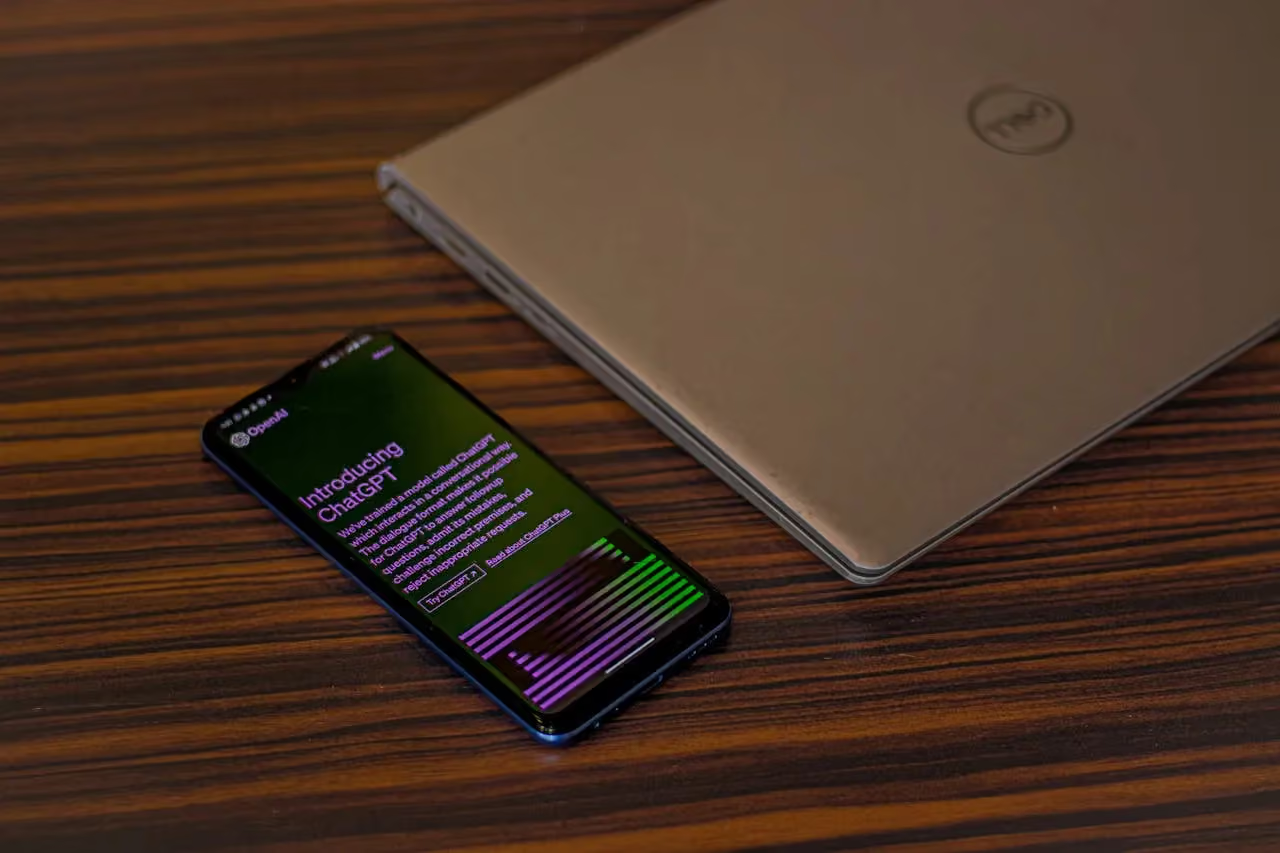
ChatGPT with browsing. When someone asks ChatGPT “who does web design for manufacturers in Manchester?” it searches the web, reads several websites, and comes back with recommendations and links.
Perplexity. A search engine that answers in full sentences instead of links. It pulls from multiple sources, synthesises an answer, and cites them. Popular with researchers and procurement teams.
The critical thing: all three decide what to include based on the quality, clarity, and specificity of your website content. They’re not looking at your ad budget. They’re reading your actual pages and deciding whether you’re worth citing.
What makes your business “citable”
This is the practical bit. AI search tools are, essentially, trying to find the best, most trustworthy answer to a question. To get mentioned, your website needs to be the kind of source an AI would want to cite.
Be specific, not vague. “We offer engineering solutions” tells an AI nothing useful. “We provide 5-axis CNC machining for aerospace components, with tolerances to 0.01mm” gives it something concrete to reference. The more specific your website is about what you do, where you do it, and who you do it for, the more likely an AI is to cite you when someone asks a relevant question.
State facts clearly. AI tools love clear, factual statements they can extract and quote. “We’ve completed over 200 fabrication projects in the last three years” is citable. “We have a proven track record of excellence” is not. Think about what someone researching your industry would want to know, and state it plainly on your website.
Structure your content properly. Use clear headings, subheadings, and short paragraphs. AI tools parse structured content far more easily than big walls of text. If you have a page about your services, break it into clear sections with descriptive headings. This isn’t just good for AI — it’s good for humans too.
Answer the questions people actually search for. How much does it cost? How long does it take? What areas do you cover? What certifications do you hold? If the answers are clearly stated on your website, you become the source.
Build authority through content. Blog posts, case studies, FAQs — all of this gives AI tools more material to draw from. A manufacturer with a detailed blog about fabrication processes is far more likely to be cited than one with a three-page brochure site.
Why this particularly matters for B2B and manufacturing
Here’s where it gets interesting for businesses in manufacturing, trades, and industrial services.
In consumer markets, the big brands tend to dominate AI search results just like they dominate traditional search. But in specialist B2B niches, there’s often very little good content out there. Most manufacturing websites are thin brochure sites with generic descriptions and no real substance.
That’s your opportunity. If you’re a CNC machining company and your website has detailed capability pages, clear specifications, genuine case studies with numbers, and helpful content about your processes — you’re going to stand out to AI tools, because there’s so little competition for quality content in these niches.
The businesses that invest in proper SEO now — with a focus on clear, specific, authoritative content — are going to be the ones that AI tools cite. And as more people use AI search for their research, being cited becomes increasingly valuable.
What you should actually do
You don’t need to panic or overhaul everything. But there are practical steps worth taking.
Audit your website content for specificity. Go through your service pages. Are they specific about what you do, or do they read like generic marketing copy? Replace vague claims with concrete details. Add specifications, numbers, locations, and clear descriptions of your capabilities.
Add structured data where it makes sense. Schema markup — the technical behind-the-scenes code that helps search engines understand your content — becomes even more important when AI tools are parsing your pages. FAQ schema, local business schema, and product/service schema all help AI tools extract and cite your information accurately.
Create content that answers real questions. Think about what your potential customers actually ask you. Then write clear, helpful answers on your website. Blog posts, FAQ pages, and detailed service descriptions all contribute. The goal is to become the source of useful information in your niche.
Make sure your basics are solid. AI search doesn’t replace traditional SEO — it builds on it. Your site still needs to be fast, mobile-friendly, properly indexed, and technically sound. If Google can’t crawl and understand your site, AI tools won’t be able to either.
Keep an eye on your AI visibility. As AI search grows, it’s worth understanding how your business appears in AI-generated results. Are you being cited? What questions trigger mentions of your business? This is a new kind of visibility metric that’s becoming increasingly important.

This isn’t going away
AI search isn’t a fad. Google is rolling AI Overviews out to more queries every month. ChatGPT’s user base keeps growing. New tools keep launching.
The businesses that take this seriously now will be in a strong position as the shift continues. The ones that ignore it will gradually become invisible, even if their traditional Google rankings hold for a while.
You don’t need to become an AI expert. You just need a website that clearly communicates what you do, who you do it for, and why you’re good at it. The AI will take care of the rest.
Frequently asked questions
Will AI search replace Google?
Not entirely, but it’s changing how Google works. Google itself is adding AI-generated answers (AI Overviews) to its search results. So even if people stay on Google, they’ll increasingly see AI-generated summaries instead of just the traditional list of links. Separately, tools like ChatGPT and Perplexity are capturing a growing share of research-type queries. The net effect is that your website needs to be good enough to be cited by these AI tools, not just ranked by the old algorithm.
Do I need to do something different from normal SEO?
The foundations are the same — clear content, good structure, fast site, proper technical setup. But AI search puts extra emphasis on specificity and authority. Vague marketing copy that might have been fine for a traditional brochure site won’t get cited by AI tools. You need concrete facts, real numbers, detailed descriptions, and genuinely useful content. Think of it as SEO that rewards substance over fluff.
How do I know if AI tools are mentioning my business?
Try searching for your services in ChatGPT, Perplexity, and Google (look for the AI Overview box at the top). Ask the kind of questions your customers would ask — “who does CNC machining in Manchester” or “best web design agency for manufacturers.” See what comes up. This gives you a rough sense of your AI visibility. There are also emerging tools specifically designed to track AI search citations, though the market is still maturing.
Is AI search relevant for local businesses, not just big companies?
Absolutely. In fact, local businesses in specialist niches often have an advantage. There’s less competition for quality content in a specific niche and location. If you’re the only fabrication company in Greater Manchester with detailed, well-structured content about your capabilities, AI tools are very likely to cite you when someone asks a relevant question. The bar for standing out is lower than you might think.