


If you’ve never hired a web designer before, the whole process can feel like a black box. You hand over some money. Something happens. Eventually a website appears. Or doesn’t. Or it does, but it’s nothing like what you had in your head.
The problem isn’t usually the designer or the client. It’s that nobody explained what the process looks like, what each person is responsible for, and what’s normal versus what’s a red flag.
Stage one: the brief
Every decent web project starts with a conversation. Not a questionnaire — an actual conversation where the designer asks about your business, your customers, and what you want the website to do.
Good questions a designer should ask: What does your business do? How do people currently find you? What do you want the website to achieve? Are there sites you like the look of? What’s your budget?
If a designer skips straight to “what colour do you want?” without understanding your business first, that’s a warning sign.
You should also get a clear proposal. How many pages, whether copywriting is included, how many rounds of revisions, what happens with hosting, and the total cost. No surprises.
Stage two: wireframes and layout
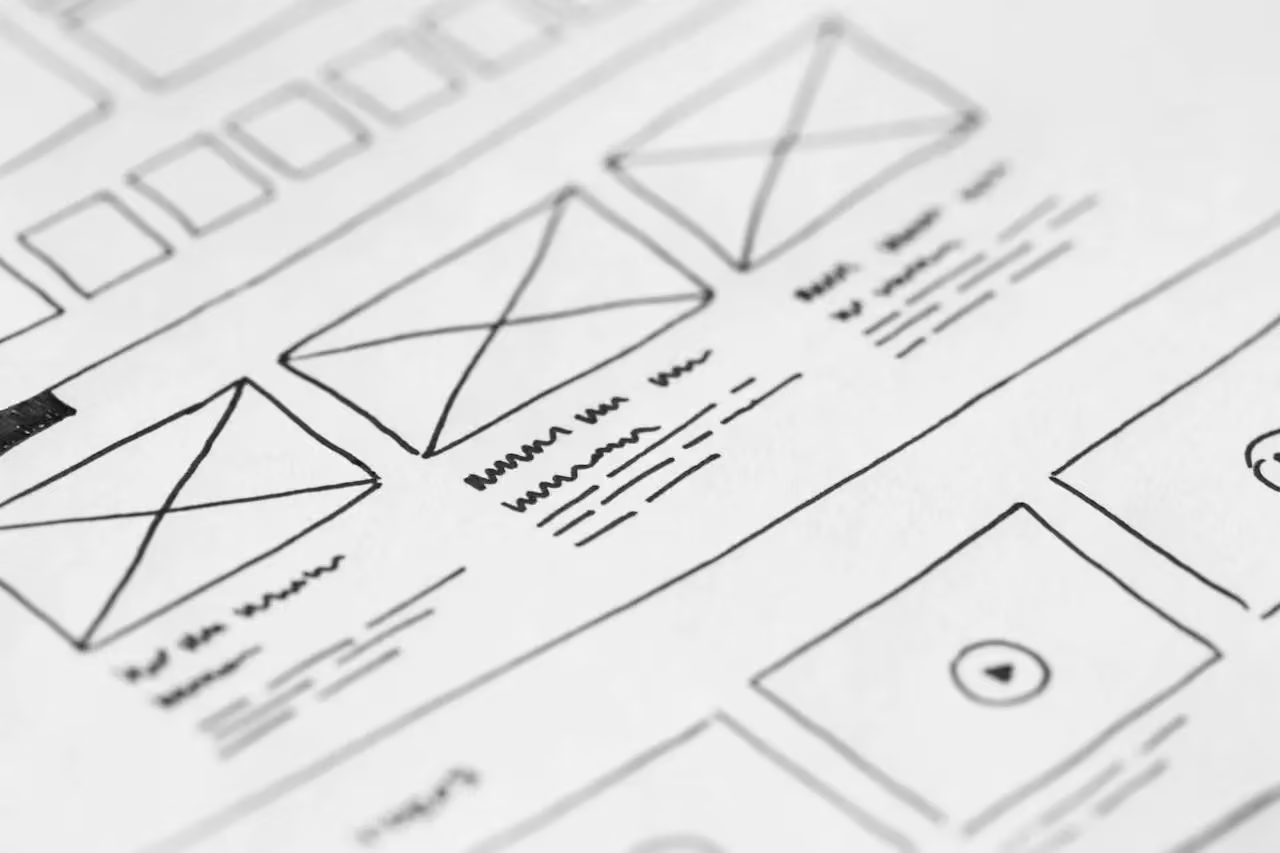
Before anyone opens design software, a good designer plans the structure. Wireframes are simple, blocky layouts showing where things go on each page without worrying about colours or fonts. Think of them as a floor plan for your website.
This is where you should be most involved. It’s much easier to move a box on a wireframe than rebuild a fully designed page. If your most important service is buried three clicks deep, now is the time to say so.
Stage three: visual design
The designer applies your brand to the approved wireframes — colours, fonts, images, the overall look. You’ll typically see designs for the homepage and one or two interior pages first.
Expect a design that reflects your brand and guides visitors towards action. Don’t expect perfection first time — that’s what revisions are for. Your proposal should state how many revision rounds are included. Two or three is standard. A revision round means you gather all your feedback, send it in one go, and the designer works through it.
Stage four: content
Here’s the bit that catches everyone out. Someone needs to write the words and provide the photos. Often, that falls on you.
Some designers include copywriting. Others don’t. Make sure you know before you sign anything.
If you’re writing content yourself, you’ll need: a homepage summary of what you do, an about page with your story, service descriptions, contact details, and real photos of your business and work. Not stock images.
Content is almost always what delays web projects. Designers frequently have the site built and ready, waiting for text and photos. Get this sorted early.
Stage five: development
The design becomes a working website. During development, the site lives on a staging environment — a private version only you and the designer can see.
Things to check: does it work on your phone? Do all links go to the right places? Does the contact form actually send emails? Are images loading quickly? Is the text accurate?
Don’t just glance at it. Click through every page, fill in the forms, test on different devices. Thoroughness here means fewer problems after launch.
Stage six: launch
The site goes live. A good designer handles the technical side and double-checks everything: SSL certificate, pages loading, forms working, Google Analytics connected.
You should also get a handover. If you can update content yourself, the designer should show you how. If there are things you shouldn’t touch, they should tell you.
After launch
This is where many businesses get caught out. The website’s live, the final invoice is paid, and the relationship ends. If something breaks in six months, you’re on your own.
Better designers offer ongoing support. Our process includes post-launch support because a website needs updates, security patches, and tweaks as your business evolves. Before you start a project, ask what happens after launch.

Red flags
No contract. Everything should be in writing — scope, cost, timeline, what happens if things go wrong.
Full payment upfront. A deposit of thirty to fifty per cent is normal. Everything upfront gives you no leverage.
No portfolio. If they can’t show previous work, ask yourself why.
They don’t ask about your business. If the first conversation is all fonts and colours with no questions about customers or goals, the result won’t be strategic.
Radio silence. Regular communication is essential. Two weeks without a reply is a problem.
They own your domain or hosting. These should be in your name, with your login details. Always.
What to expect to pay
For a proper small business website — custom design, mobile-friendly, five to ten pages, basic SEO — expect two to seven thousand pounds. If you’re ready to start the conversation, get in touch for a quote. Clear price upfront, no surprises.
Frequently asked questions
How long does it take to get a website built?
A simple brochure site takes three to six weeks. More complex sites with custom features take eight to twelve weeks. The biggest delay is almost always content — waiting for text, images, and feedback. The more prepared you are, the faster it goes.
What do I need to provide to my web designer?
A clear idea of your business and customers, any branding you have, real photos, and the text for each page (unless copywriting is included). Having this ready before the project starts makes everything smoother.
How many revisions should be included?
Two to three rounds is standard. Each round means you compile all feedback and send it in one batch. If you’re clear during wireframes and design stages, you’ll rarely need more than two rounds.
Should I write my own website content or hire a copywriter?
If you write clearly and know your business well, doing it yourself is fine for smaller sites. But if writing isn’t your strength, or you want content crafted to convert visitors into enquiries, professional copywriting is worth the investment.