

If you run a manufacturing business and you think LinkedIn is just a place where people post about leaving their jobs and share motivational quotes, fair enough. That’s a lot of what’s on there. But underneath that noise, there’s something genuinely useful happening for manufacturers — and most are ignoring it completely.
LinkedIn is where procurement managers browse. It’s where engineers look for specialist capabilities. It’s where buyers at large OEMs and tier-one companies research potential suppliers. It’s where facilities managers find maintenance and fabrication contractors.
These are the people who decide who gets the work. And they’re on LinkedIn every day.
You don’t need to become a content creator or start filming selfie videos from the shop floor. But if you’re not using LinkedIn at all, you’re missing a channel that’s already full of your potential customers.
Why LinkedIn works for manufacturing
Social media and manufacturing feel like an odd combination, and for most platforms, they are. Instagram isn’t where a procurement manager at a tier-one automotive supplier finds a new sheet metal fabricator.
LinkedIn is different because everyone’s there in a professional context. They’re thinking about work. They’re open to discovering new suppliers and capabilities. Hundreds of thousands of UK-based manufacturing, engineering, and procurement professionals are on the platform.
It’s not about going viral. It’s about being visible to the right people, consistently.
Getting your company page right
Before you post anything, make sure your LinkedIn company page isn’t letting you down.
Your headline and description should say what you actually do. Not “innovative solutions for modern industry” — nobody searches for that. Something like “CNC machining and precision engineering, Greater Manchester. Aerospace, defence, and motorsport.” Clear, specific, and searchable.
Your logo and banner image should be current. The banner is a big, free advertising space. Use a photo of your workshop, your team, or your best work. Not the LinkedIn default grey background.
Your website link should work. Sounds obvious, but check it. And make sure it goes to your homepage or a relevant landing page, not a 404.
Your “About” section should read like a human wrote it. Describe what you do, who you do it for, what your capacity is, and where you’re based. Include your key capabilities, certifications, and any notable clients you can mention. This section gets read more than you’d think — particularly by people who’ve seen a post from your company and clicked through to learn more.
What to actually post
This is where most manufacturers either do nothing or get it wrong. Here’s what works.
Show your work. A photo of a finished component, a fabricated assembly, a completed installation. Add a short description: what it is, what material, what the application is. These posts demonstrate capability better than any brochure.
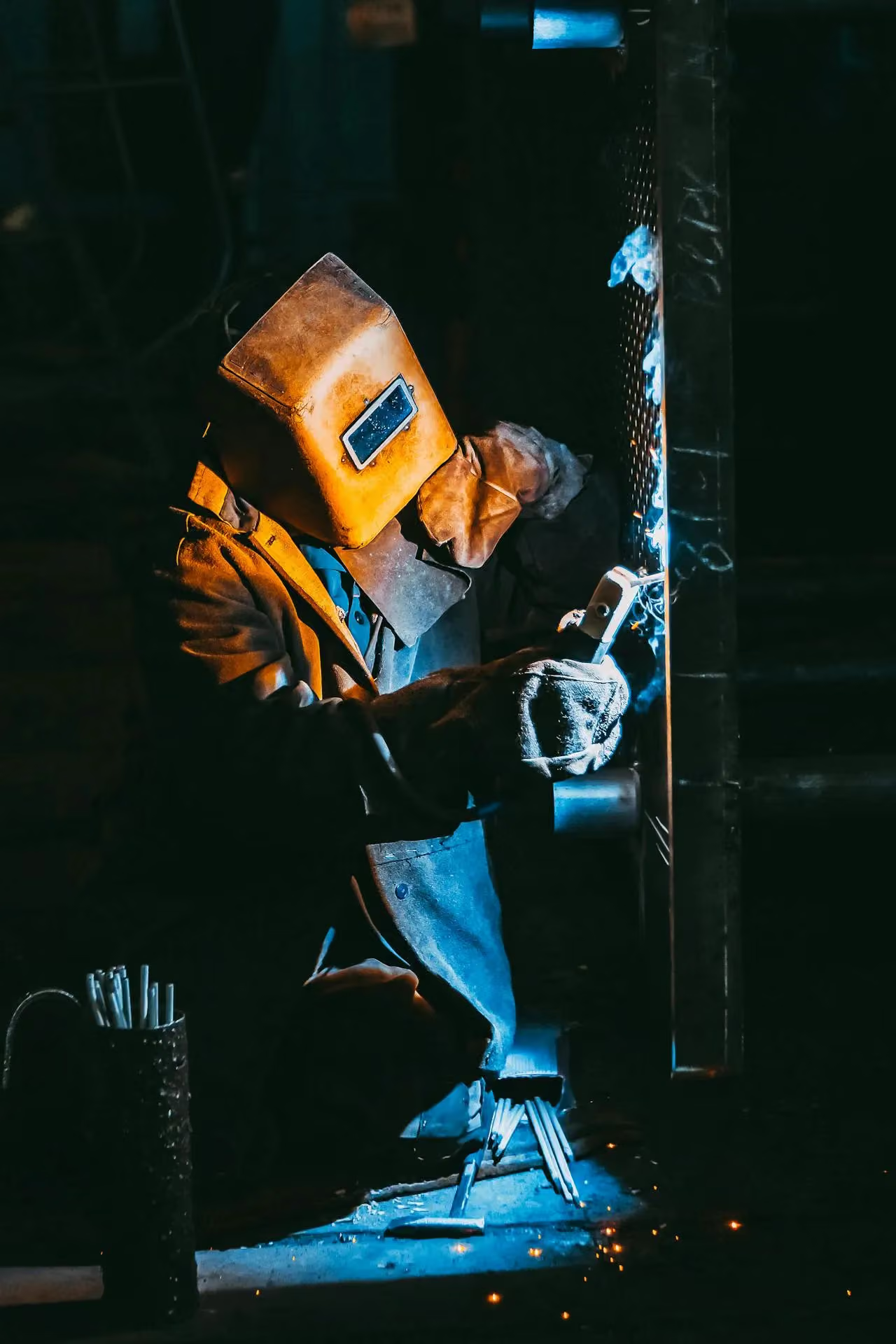
Show your machines and processes. A laser cutter in action. A time-lapse of a welding job. Manufacturing is inherently interesting — processes routine to you are fascinating to others.
Celebrate your team. New starters, apprenticeship completions, long service milestones. These humanise your business and tend to get shared by the employees involved, extending your reach.
Share project stories. Not formal case studies — just the story of a job. “A customer came to us with a challenging brief…” followed by what you did and how it turned out. Keep it conversational.
Behind the scenes. Quality inspection, material testing, a tidy workshop. Anything that shows professionalism.
Industry news and opinion. New regulations, material shortages, industry trends — comment from your perspective. It positions you as knowledgeable, not just another manufacturer with a logo on LinkedIn.
The difference between engaging and broadcasting
Most companies treat LinkedIn like a noticeboard — post and walk away. That doesn’t work.
LinkedIn rewards two-way engagement. Comment on someone else’s post and your name gets seen by their audience. Reply to comments on your own posts and the algorithm shows it to more people. If a buyer posts about a challenge, respond with something useful — not a sales pitch, just genuine input.
This is what separates companies that get results from those that shout into the void.
How often should you post?
Two to three times a week is the sweet spot for most manufacturing companies. Enough to stay visible, not so much that you run out of things to say or it becomes a full-time job.
Consistency matters more than frequency. Posting twice a week every week for six months will get you far better results than posting every day for a month and then going silent for three months.
If two to three times a week feels like too much, start with once a week. Every week. Pick a day — Tuesday morning, say — and make it a habit. One photo of a job with a short description. Ten minutes. That’s enough to build momentum.
Employee advocacy: your secret weapon
Your employees’ personal LinkedIn profiles are far more powerful than your company page. LinkedIn’s algorithm favours personal profiles — a post from your MD or senior engineer will typically reach three to five times more people.
Encourage your team to post about their work. An apprentice sharing their progress. A welder showing a tricky weld they’re proud of. It’s not about making everyone a social media manager — it’s about creating a culture where people feel comfortable sharing their work.
What not to do
A short list of things that waste your time or actively put people off.
Don’t hard sell. “Looking for precision CNC machining? Call us today!” three times a week will get you unfollowed fast. Show your work and let people come to you.
Don’t share generic motivational quotes. Nothing to do with your business and makes your page look like it’s on autopilot.
Don’t post obviously AI-generated content. If your posts suddenly say “in today’s rapidly evolving manufacturing landscape,” your audience will notice. Write like a human who works in manufacturing.
Don’t ignore comments. Every comment is a potential conversation with a potential customer.
Don’t connect just to pitch. A connection request followed by a sales message kills the relationship before it starts.
Making it manageable
If you’re a busy manufacturer, LinkedIn can feel like another job you don’t have time for. But it really doesn’t have to be.
Take a photo of a job before it leaves the workshop. Write two sentences about it. Post it. That’s it. Five minutes.
If you want to take it further, pairing LinkedIn activity with your broader digital marketing creates a compounding effect. Content on your website supports your LinkedIn posts. Case studies give you material to share. Blog posts show your expertise. It all works together.

And if you want to see how other manufacturers are using their online presence to generate real enquiries, that’s worth exploring too. LinkedIn is just one piece, but for B2B manufacturers, it’s often the most underused piece.
The procurement manager researching suppliers for their next project is on LinkedIn right now. The question is whether they’ll see your company or your competitor’s.
Frequently asked questions
Is LinkedIn really worth it for a small manufacturer?
Yes. In fact, small manufacturers often get proportionally better results than large ones because their content feels more personal and authentic. A ten-person fabrication shop posting real photos of their work and their team creates a genuine connection that a corporate page from a multinational can’t match. The key is consistency — regular posts showing real work to build visibility with the people who make buying decisions.
How long does it take to see results from LinkedIn?
LinkedIn is a slow burn, not a quick win. Most manufacturing companies start seeing genuine engagement — profile views, connection requests from relevant people, inbound messages — after about three to six months of consistent posting. Actual enquiries from LinkedIn typically follow once you’ve built a visible presence and a body of content that demonstrates your capabilities. Think of it as building a reputation, not running an ad campaign.
Should I use my personal profile or the company page?
Both, ideally. But if you have to choose one, your personal profile will reach more people. LinkedIn’s algorithm gives personal profiles significantly more organic reach than company pages. Post from your personal profile about your work, and tag the company page. The company page should still be active as a professional presence that people can visit to learn about your business.
What kind of photos work best for manufacturing LinkedIn posts?
Finished components and fabrications consistently perform well — people like seeing the end product. Process shots (welding, machining, cutting) get high engagement because they’re visually interesting. Team photos and workshop shots build trust. Avoid stock images entirely — they’re obvious and undermine credibility. You don’t need a professional camera; a clear smartphone photo with decent lighting is more than enough.