

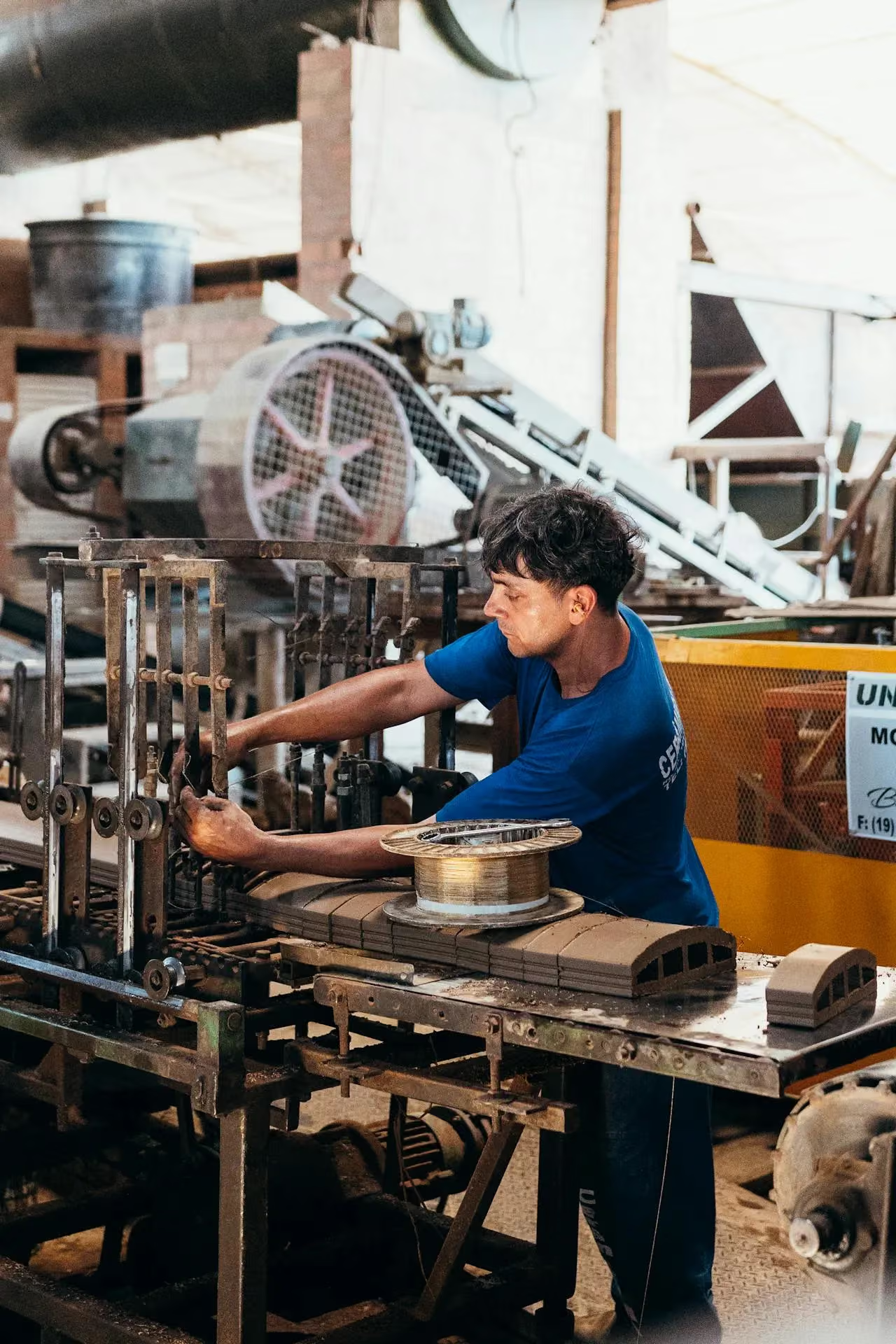
Every manufacturing conference, trade magazine, and LinkedIn post is banging on about AI. Smart factories. Industry 4.0. Digital twins. Predictive this and autonomous that.
And if you run a fabrication shop or machine shop with fifteen people, most of it sounds like it was written for Siemens or Toyota. Not for you.
But here’s the thing. AI isn’t just for the big boys anymore. The tools have got cheaper, more accessible, and more practical. There are genuine applications for small manufacturers right now — not in five years, not after spending half a million on new systems. Now.
Where AI actually helps
Let’s skip the theory and talk about what AI can do in a business like yours today.
Quality inspection
Checking finished parts for defects is time-consuming and subjective. One inspector might flag something another would pass. Consistency varies with tiredness and pressure to get orders out.
AI visual inspection uses cameras and image analysis to check parts for surface defects, dimensional issues, coating problems, and assembly errors. It doesn’t get tired, doesn’t have bad days, and applies the same standard to the thousandth part as the first.
This doesn’t mean sacking your QC team. It means giving them a tool that catches things human eyes miss and provides a consistent baseline. We’ve built systems that analyse photos for surface, coating, structural, and assembly defects, assign severity ratings, and auto-flag anything needing human review.
Document processing
Manufacturers drown in paperwork. Purchase orders, invoices, delivery notes, technical drawings, cutting lists, material certificates. Most still get processed manually — someone reads a document, extracts information, enters it elsewhere.
AI reads these documents automatically. It extracts data from PDFs, scans, and photos. Matches invoices to purchase orders. Pulls specifications from technical drawings.
At Kingsland Fabrications, an aluminium window and door manufacturer we work with, AI reads supplier invoices and runs a three-pass match against purchase orders, flagging discrepancies automatically. It also reads cutting list PDFs and generates paint notes grouped by category, with exclusion detection and hanging allowance calculations. Tasks that took supervisors thirty to forty-five minutes per job now happen automatically.
Quoting and estimating
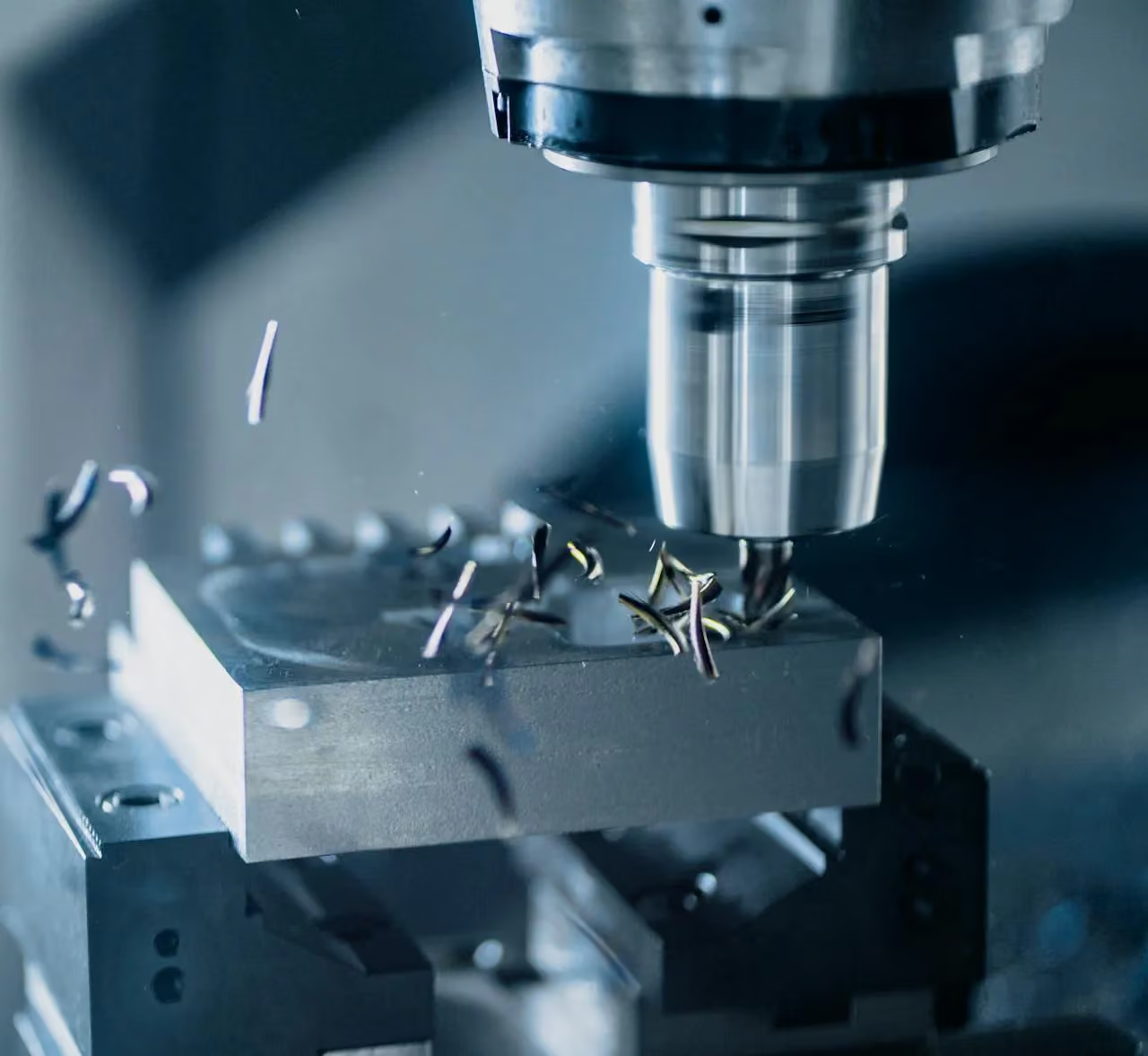
How long does it take to put together a quote? AI can analyse your historical job data — materials, time taken, wastage rates, actual versus estimated costs — and produce more accurate quotes faster. It won’t replace twenty years of experience, but it provides a data-driven starting point that speeds things up and improves accuracy.
Customer communication
Every manufacturer has a pile of emails and calls to return. Order status. Delivery dates. “Can you do X?” questions. A lot of this is routine.
AI assistants provide real-time production updates without anyone picking up the phone. We’ve built conversational systems that give shop floor intelligence — stage tracking, delivery estimates, order status — through simple chat queries with role-based access.
What’s realistic now versus hype
Working well right now:
- Document processing (invoices, drawings, orders)
- Quality inspection from photos
- Workflow automation (email chasing, status updates, reminders)
- Customer-facing AI assistants for routine queries
Getting there:
- Production scheduling (works for simpler environments, needs oversight for complex ones)
- AI-assisted quoting (promising, needs good historical data)
Still mostly hype for small manufacturers:
- Fully autonomous production lines
- “Digital twins” of your entire operation
- Lights-out manufacturing
Focus on what works now and delivers measurable savings. The rest will come.
What it costs
Off-the-shelf tools (scheduling assistants, basic document scanning, chatbots): fifty to three hundred pounds per month.
Custom solutions (document processing for your specific documents, quality inspection for your products, workflow automation): typically five to twenty thousand pounds to develop, with modest running costs after.
The ROI question: If AI saves your admin team ten hours a week, that’s roughly five hundred hours a year. At even a conservative hourly rate, a five-figure investment pays for itself within months.
Made Smarter funding
If you’re a manufacturer in the North West of England, the Made Smarter programme offers funded support for SME manufacturers adopting digital technologies including AI. This can include grant funding covering a portion of development cost, plus free digital roadmapping workshops.
Eligibility and funding levels change, so check current details, but it’s specifically designed for small manufacturers making their first steps into digital technology. Worth a conversation even if you’re not sure you qualify.

Getting started
Don’t try to digitally transform your entire operation overnight. Pick one process that eats the most time, causes the most errors, or creates the most frustration. Document how it works now. Then explore whether AI can improve it.
Good first projects:
- Invoice processing or PO matching
- Extracting data from technical documents
- Automating routine email communications
- Basic quality checks on finished products
These have clear inputs, clear outputs, and measurable results.
If you’re wondering where to start, we work with manufacturers regularly and we’ll tell you straight if something isn’t worth pursuing. Have a look at our AI agents service or our manufacturing industry page to see how we work with businesses like yours.
Frequently asked questions
Is AI realistic for a manufacturer with fewer than fifty employees?
Absolutely. The most impactful applications — document processing, quality inspection, workflow automation — work just as well for a fifteen-person shop as a two-hundred-person factory. Pick the right problem and you’ll get meaningful results regardless of size.
How much does AI cost for a small manufacturer?
Off-the-shelf tools run fifty to three hundred pounds per month. Custom solutions typically cost five to twenty thousand pounds to develop. Most custom systems pay for themselves within three to six months. Programmes like Made Smarter can reduce upfront costs.
Will AI replace manufacturing jobs?
In our experience, no. It takes the repetitive, low-value parts of existing roles off people’s plates — manual data entry, routine document processing, basic inspection checks. Your people then spend time on work that needs human judgement and experience. Most manufacturers who adopt AI don’t reduce headcount; they get more done with the same team.
Where should a small manufacturer start with AI?
Document processing or workflow automation. Clearest ROI, lowest risk, fastest payback. Pick one process that involves moving information from paper into a system, automate it, prove the value, then expand.